
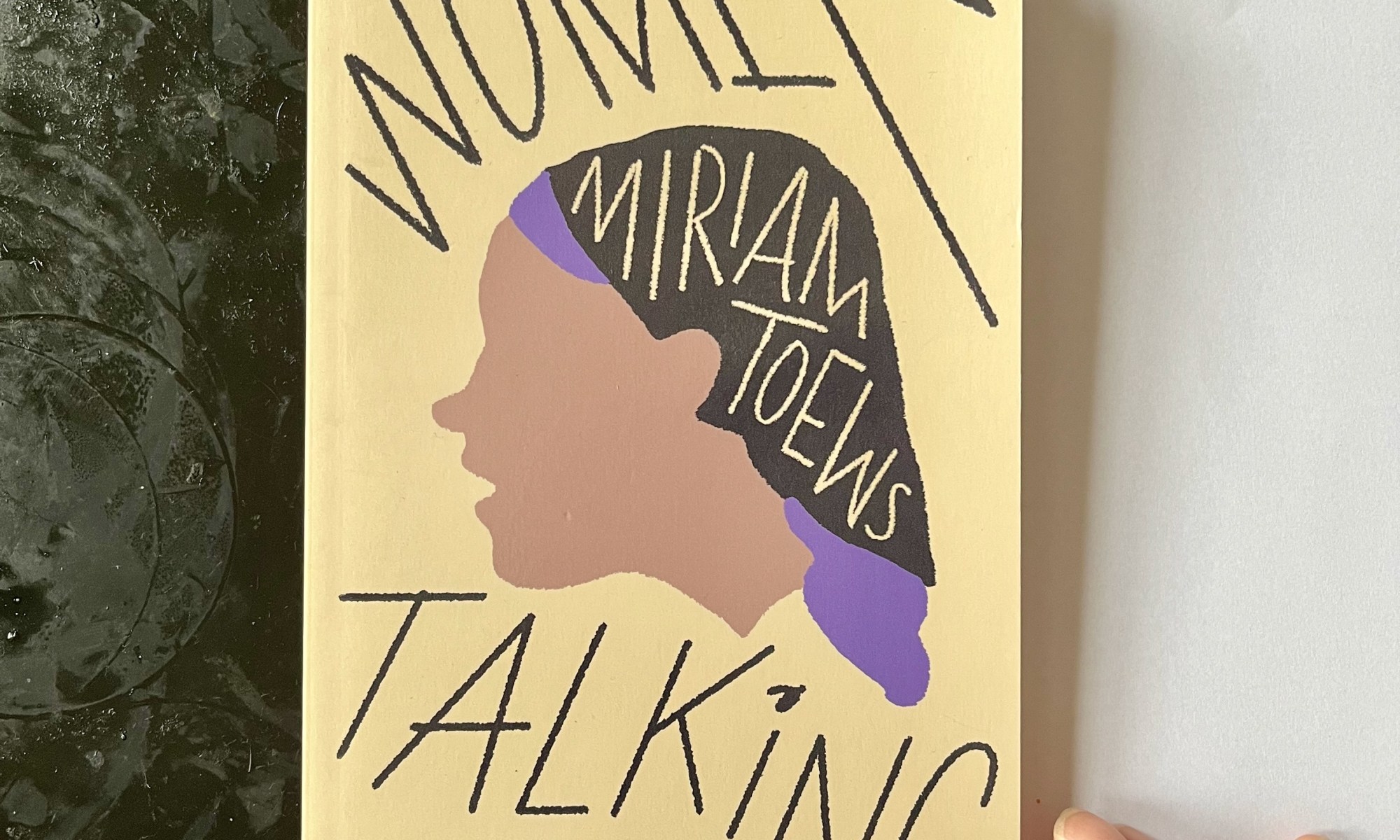

Imagine you’re a woman in a deeply religious community. Imagine you often wake up, aching and covered in bruises. Imagine you find out you and other women are systematically raped by men belonging to the same community. Now imagine that this really happened to the women of a Mennonite colony in Bolivia between 2005 and 2009. Miriam Toews, who was raised Mennonite, wrote a fictional account of it, called Women Talking. Want to know why they’re talking, and what they’re talking about? Read on!
Women Talking is about the women of Molotschna Colony in Colombia. They have just found out that the mysterious attacks that took place during the nighttime for years weren’t ghosts or spirits, but men. They have to decide what to do, and have decided on three possible options: doing nothing, fighting, and leaving. The novel shows us the meetings between the women when they try to reach consensus on what to do.
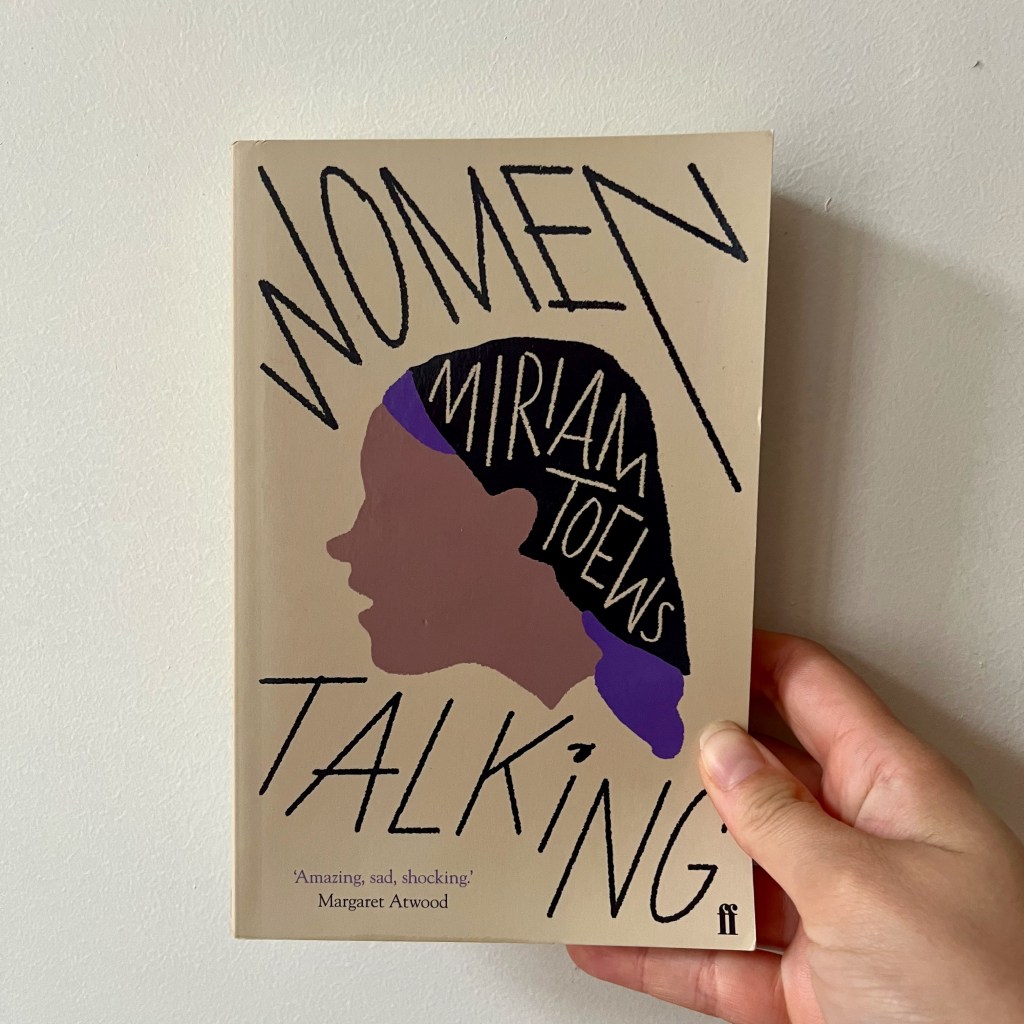
Imagine you’re one of the women at Molotschna Colony. If you’re like me, someone who calls herself a feminist, not a single fibre of your being would consider doing nothing; doing nothing and letting these horrible men get away with it. But then, these women are not like you and me. They are brought up with the idea that they are inferior to men – inferior even to the animals at their farm. They can’t read, aren’t allowed to go to school, and therefore they don’t think of their position as strange or odd. So what would you do, if you were one of them?
Imagine you were pregnant and you didn’t know how it had happened, or if you were told it must have been a demon visiting you. Imagine that you found out that the father of your unborn child was your own brother. Or imagine that your teeth were knocked out of your face because you struggled too much while being assaulted. Imagine that you decided to become angry at the men who did this to you. What would you do?
Imagine that you weren’t allowed to talk about what has happened to you. Imagine that you had to gather in secret, because there would most certainly be dire consequences if you were found out. Imagine you wanted your words to be written down in order to leave behind proof that you tried to stand up for yourselves – but that you had to trust a man to do so, because of course you don’t know how to write. Thankfully, that man has a dark past and isn’t considered a true man. So you just let him sit there and take the minutes. But what would you do with these notes you cannot read?
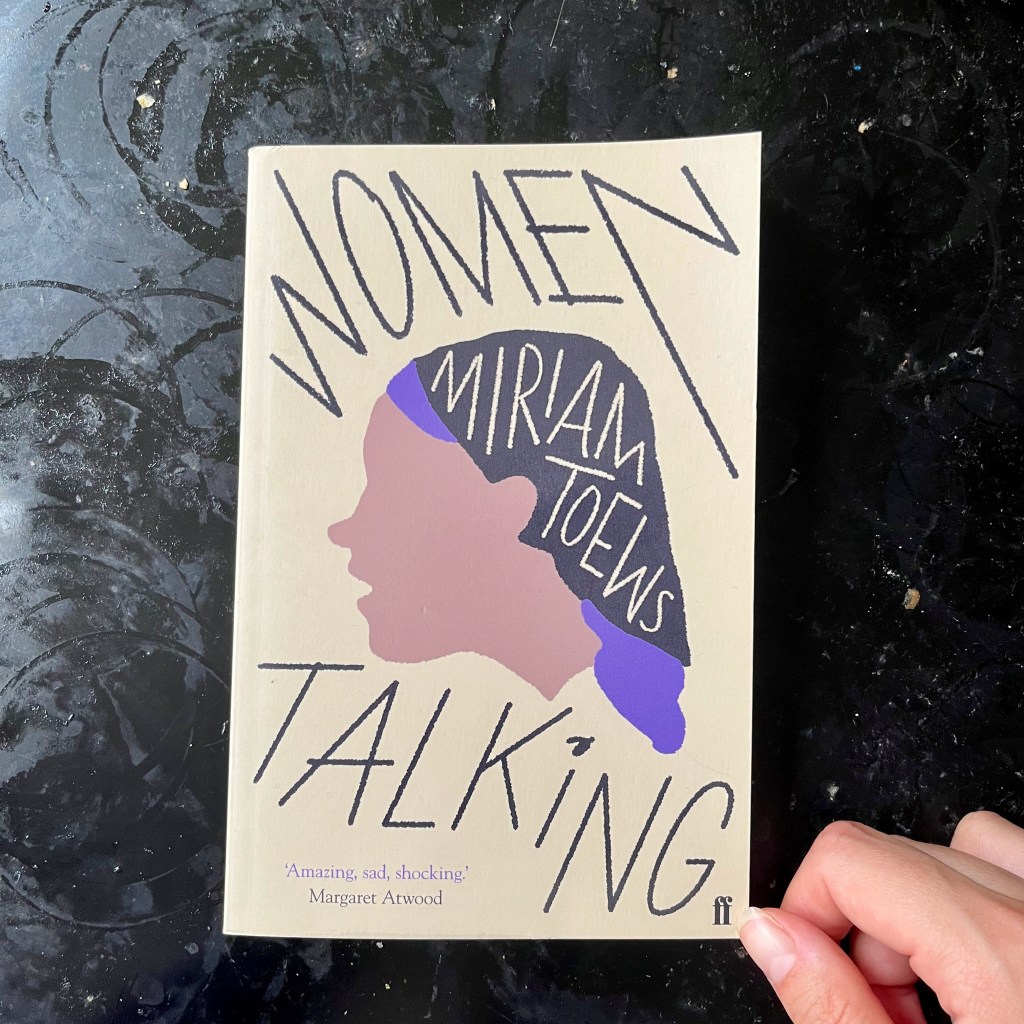
Imagine you only had two days to decide what to do. Imagine you would have to go against the word of God as written in the Bible, which isn’t an easy choice. For instance, would you still be a good Christian if you wouldn’t forgive the men for their evil deeds, because it would mean they would never enter heaven? But imagine, then, that the words in the Bible might be very different from what you’ve been told. Wouldn’t it be much easier to leave, in that case? But where would you go?
As you can see, there are so many questions that are asked in Women Talking. For the very first time in their lives, these women have to think for themselves. They have to consider all the options, and therefore, they have to imagine a life outside of the coolony they’ve been brought up in. The world, they’ve been told, is a scary place, and they don’t know what’s it like out there, or how to read a map. Would you go if you had no idea what would be waiting for you outside of that small piece of the world you used to consider your home?
While reading Women Talking, I kept thinking that most of the attacks are too gruesome to imagine. Also, it was so hard to imagine that these women needed to talk for so long in order to come to the conclusion that they were better off leaving their colony. But Toews’ novel, who describes it as ‘both a reaction through fiction to these true-life events, and an act of female imagination’, reminded me why I love reading; I had to use my imagination, too. At first, I wanted to shout at the women that it was a no-brainer. But then, the more I got to know them, the more I understood them, and the more I realised that it wasn’t as simple for them as it would have been to me.
What did you think of Women Talking? Do you think you could imagine what it’s like to grow up in a Mennonite colony like this one? What would you have done? Please let me know in the comments! Also, don’t forget to follow me for more book-related posts!

 The Open Book