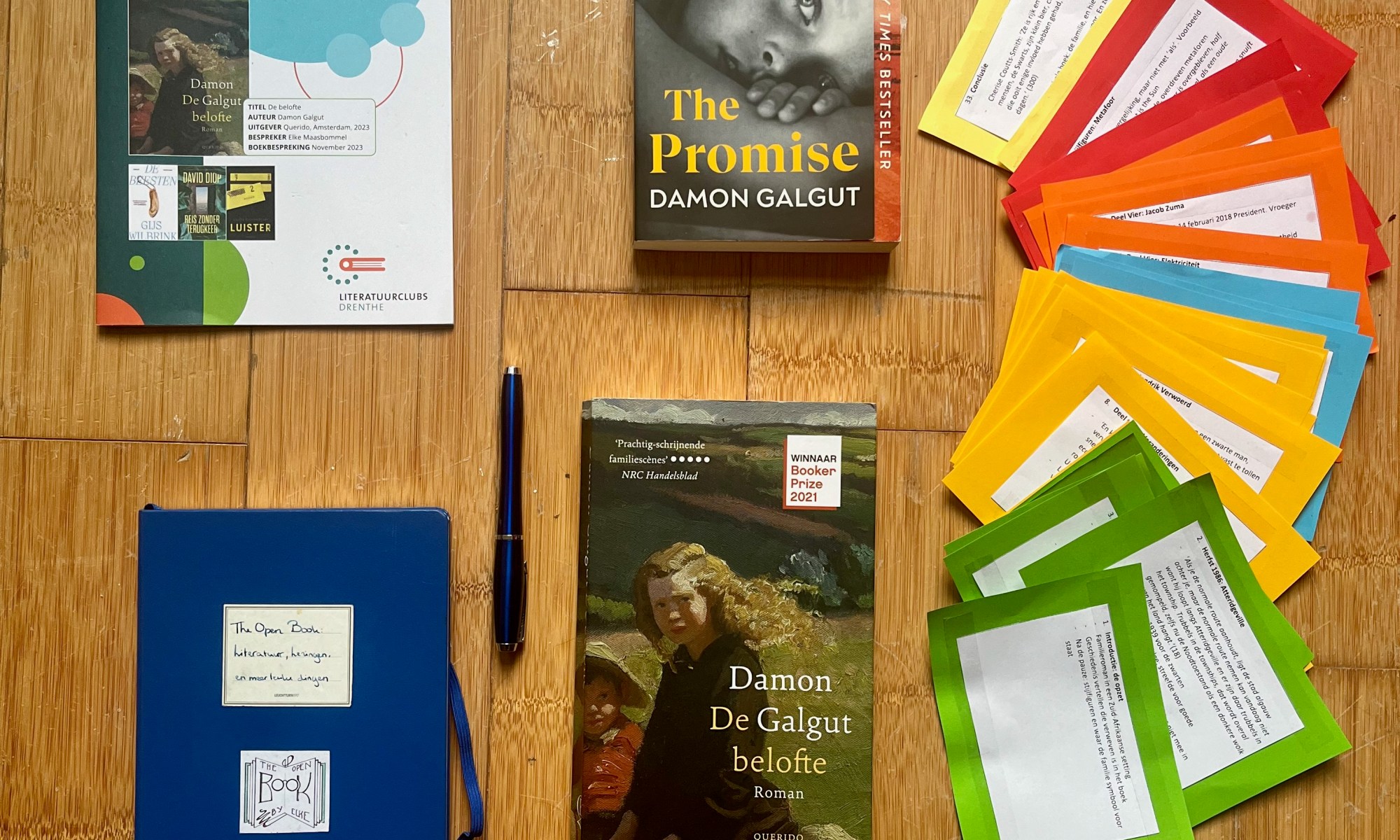

It’s almost time. You can tell by my bitten-to-the-quick fingernails, by my disorganised hair, by the pile of clothes that I will or won’t wear, and by the fact that I keep blabbering in this shrill voice. I’m tired and I’m stressed. What if I fail, what if they won’t listen? What if it’ll be boring, or I’ll tell them things they already know? What if they fire me? What if, what if, what if… Like I said: It’s almost time for my second lecture series. Want to know what I’ll be talking about? Read on!
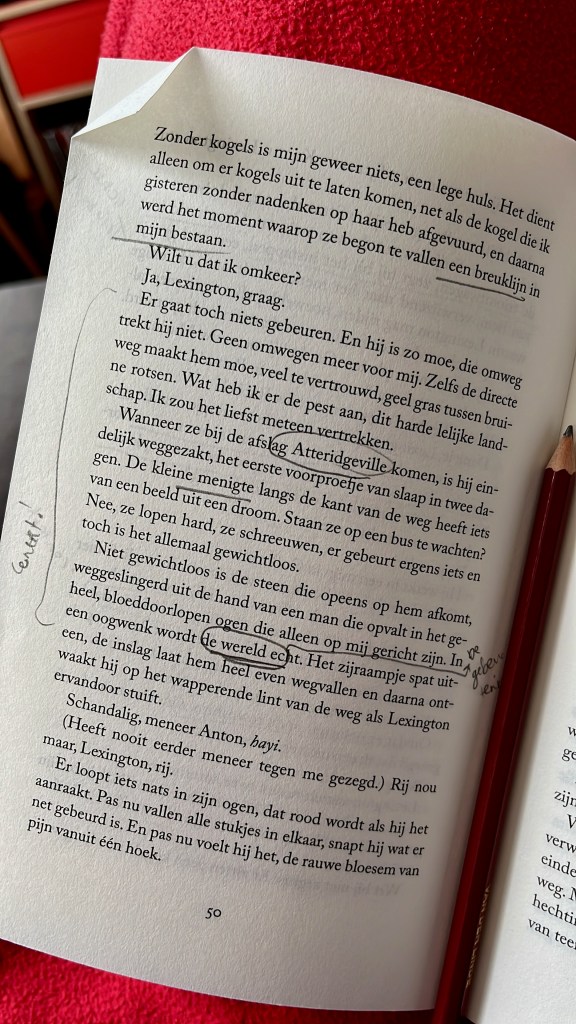
Last year, I had to give a lecture on this Dutch book, called De kapperszoon. I was terribly nervous, and I had no idea whether I was doing the right thing. Turns out, it went really well, people were happy, and I felt quite good about myself. You can read all about that first lecture and the accompanying interview here and here. This time, I picked Damon Galgut’s Booker Prize-winning novel The Promise (De belofte in Dutch). It’s about a South-African family whose members all die to the backdrop of a changing country. I’ve read it four times, so far.
The thing is, I’ve read about family members before. I’ve also read about death and dying before. I’ve also read about changing countries before. I had never read about South Africa before, however. I knew next to nothing about it, and I thought that this might either be a problem, or I could tackle it in my lecture. I just hoped it was the right decision.
The novel takes place during a couple of days or weeks in a specific year in the last four decades. One of the most important events in the recent history of South Africa is the abolishment of apartheid, as the final country in the world to do so. However, seeing as I’m from 1991, a year after it was abolished, and from Europe, which tends to focus on, well, let’s face it, Europe, I didn’t know too much about it. So I decided to talk about this topic, since the lives of the characters in The Promise are intertwined with the events in South Africa.

While doing my research, I was reminded yet again why reading is so important: it is pure education. Had I not read Galgut’s novel, I would never have found out how South Africa has changed (or tried to change, or failed to change) over the last forty years. I would never have known what it was like to live in a country which is still divided. I would never have wondered what it would be like to have no electricity. I would not have given South Africa a second thought.
I think I know why The Promise was awarded the Booker Prize; it shows us the very painful and troubled history of South Africa (while also making sure there’s plenty to laugh at, thankfully – something else I will focus on in my lecture), something not everyone is fully aware of. I hope my audience will be just as interested in the book and the country it describes as I was.
It’s almost time, and I’m stressed and worried and scared and don’t know what to wear because I am afraid I will fail. But I do know that the story I’m planning to tell is an important one.
Which book would you like to give a lecture on? Are there any stories that you feel aren’t as well-known as you would like? What do you do if you’re stressed or nervous? Do let me know in the comments! Also, don’t forget to follow me for more book-related posts!

 The Open Book
Best of luck with that lecture, and advanced Happy Birthday! What a way to welcome November than celebrating your special day.
Incidentally, the book you’re going to discuss is rather timely. South Africa had been in turmoil years ago, with several farmers being murdered.
LikeLike
Oh, thank you so much for your kind message! I hope it will be a special lecture on my special day!
About South Africa: it’s definitely a timely novel. The country has been in trouble for years, with riots, and murders, corruption, and so on…
LikeLiked by 1 person