

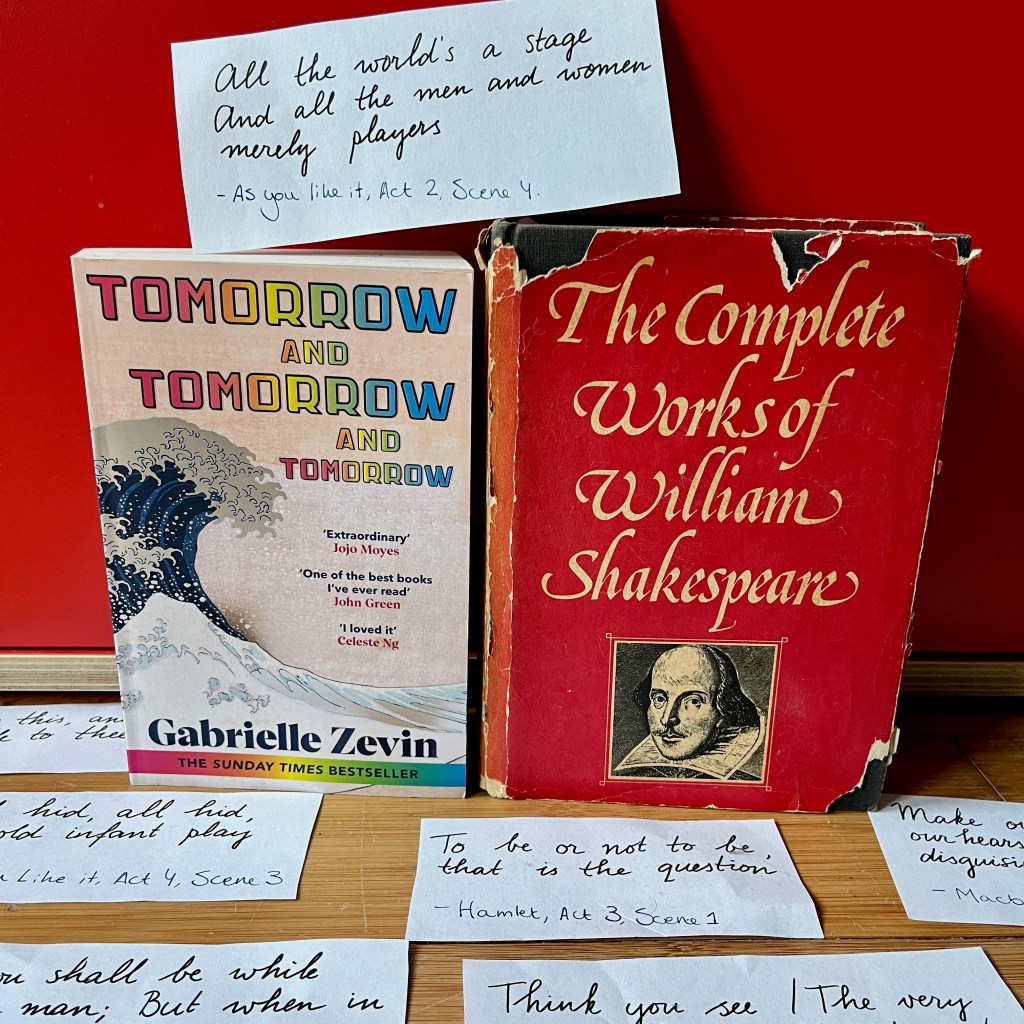
William Shakespeare died over four hundred years ago, but his work has never ceased to be relevant. He continues to be one of the most important authors the English-speaking world has ever produced, and his influence on modern writers cannot be exaggerated. There are hardly any novels which are not, however subtly, indebted to Shakespeare. Sometimes, however, the references are obvious, as was the case in Gabrielle Zevin’s Tomorrow, and Tomorrow, and Tomorrow. Her novel breathes Shakespeare; let’s analyse through quotes from his plays. Read on!
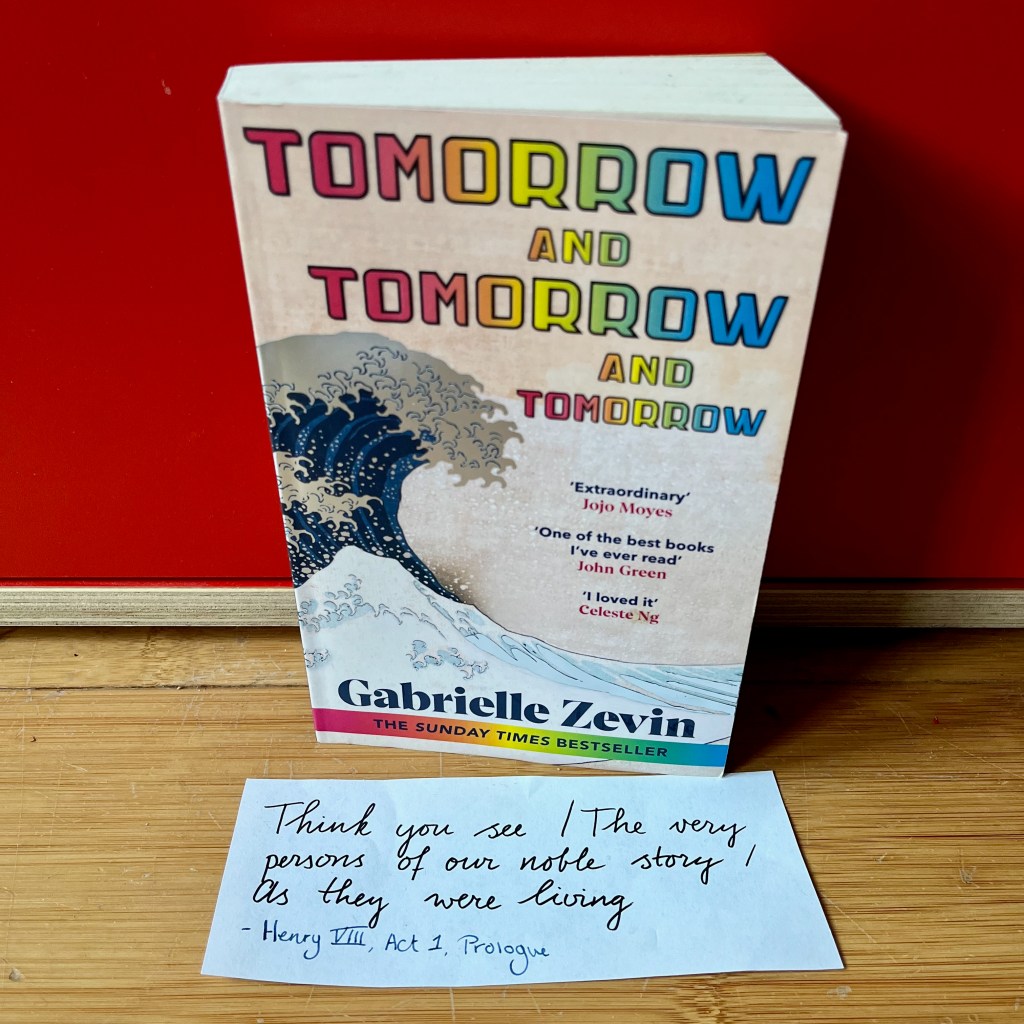
Think you see The very persons of our noble story As they were living
Henry VIII, Act 1, Prologue
Tomorrow, and Tomorrow, and Tomorrow is about Sam and Sadie, two gamers who are sometimes best friends and sometimes their worst enemies. They design games together, and share their whole life without actually talking that much. Aided by their mutual friend Marx, they become the next big thing in the gaming industry, while also trying to find out who they are and what they want to leave behind in a world that changes both quickly and imperceptibly.
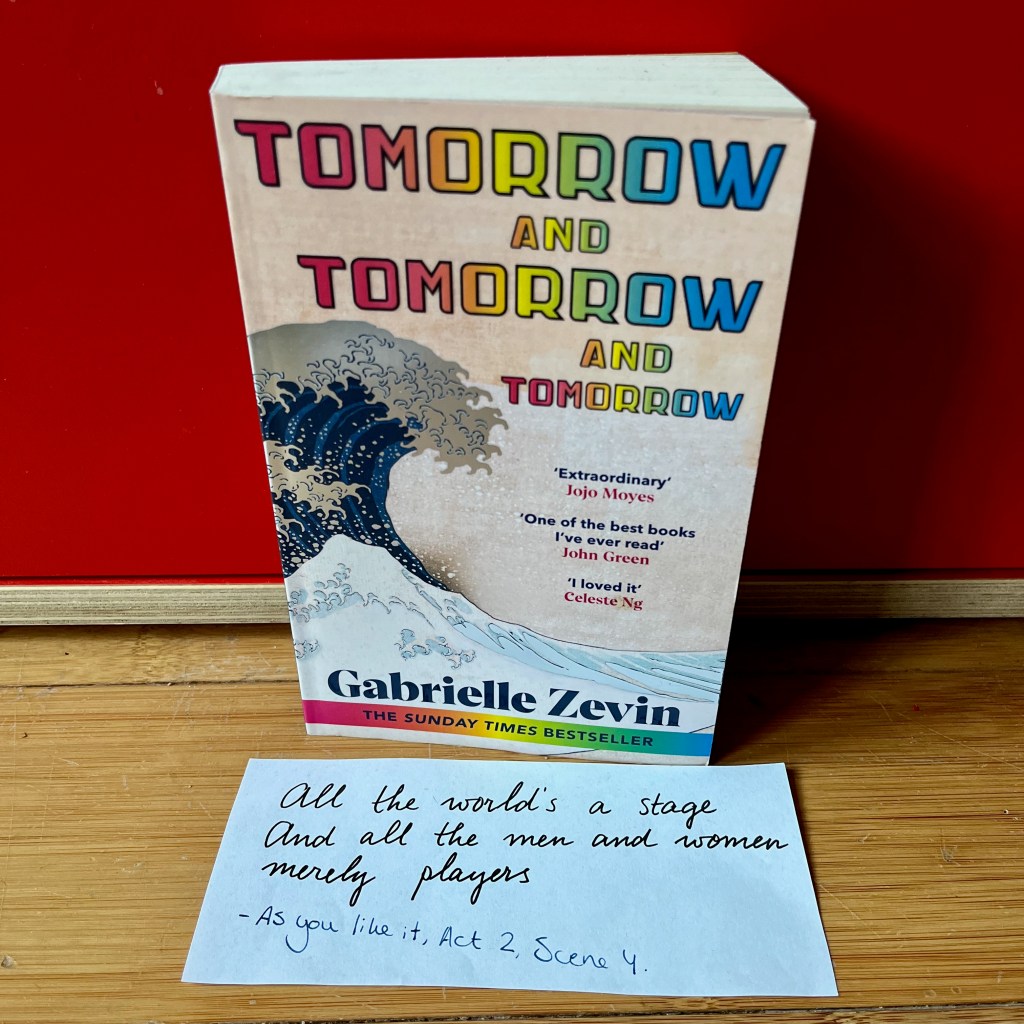
All the world’s a stage And all the men and women merely players
As You Like It, Act 2, Scene 4
Gaming is a major theme in Tomorrow, and Tomorrow, and Tomorrow, and its many benefits are mentioned throughout the novel. Firstly, one can hide oneself in game through make-belief. In the virtual world, people can pretend to be someone else while not having to address all the things that make them vulnerable in the real world. Somehow, by playing and creating their games, Sam and Sadie connect in the real world. The games they create incorporate elements from their own (and each other’s) lives, thus making these games a reflection of their identities.
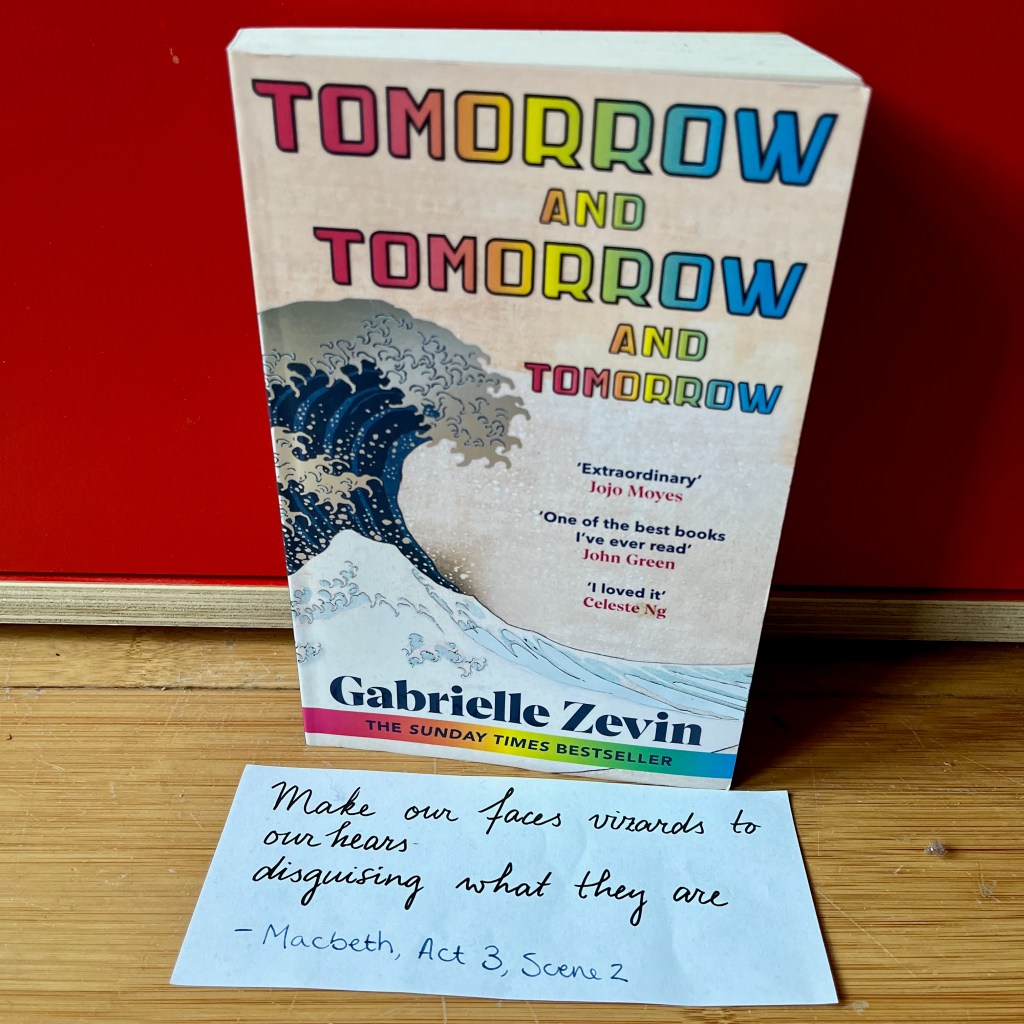
Make our faces vizards to our hearts / disguising what they are
Macbeth, Act 3, Scene 2
Secondly, gaming, much like literature, allows the player to pretend to be someone else. It’s the perfect form of escapism, especially since, unlike literature, the player takes an active part in what will happen next. In Tomorrow, and Tomorrow, and Tomorrow, it becomes clear that Sam and Sadie’s lives are joint inextricably because of the games they play. While gaming, both Sam and Sadie can pretend to be someone else, and they need this because they’re not able to truly participate in their real lives. However, they get to know each other intimately in the games they create, because they show their real selves there.
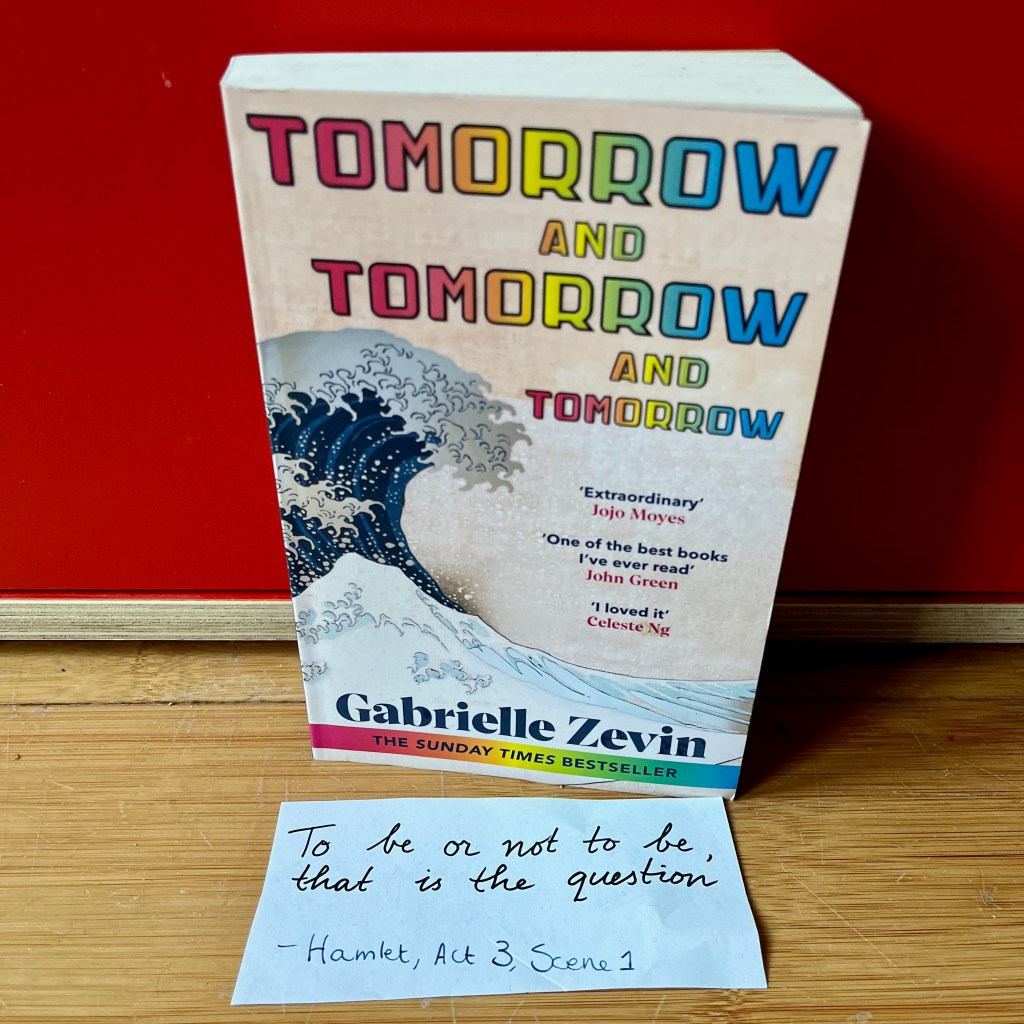
To be or not to be, that is the question
Hamlet, Act 3, Scene 1
Another benefit of gaming is immortality. A player can die in games, but if this happens, they can simply restart and try again. Similarly, players can replay a level if they are not satisfied with their scores. Zevin plays with this notion in her novel; Sam and Sadie, though they’re both excellent gamers, go against the idea that everything has to be perfect and that only high scores matter. They know their own lives are far from being flawless (Sam was in an accident when he was younger, which killed his mother and left him crippled, and Sadie stays in a relationship which she knows is destructive), and therefore they incorporate elements in their games that players have to lose in order to move on to the next level. They realise that games are ultimately not true to life, because of the character’s eternal ability to regenerate, in effect making death obsolete. Death and failure should be part of games, they argue, because they’re part of life.
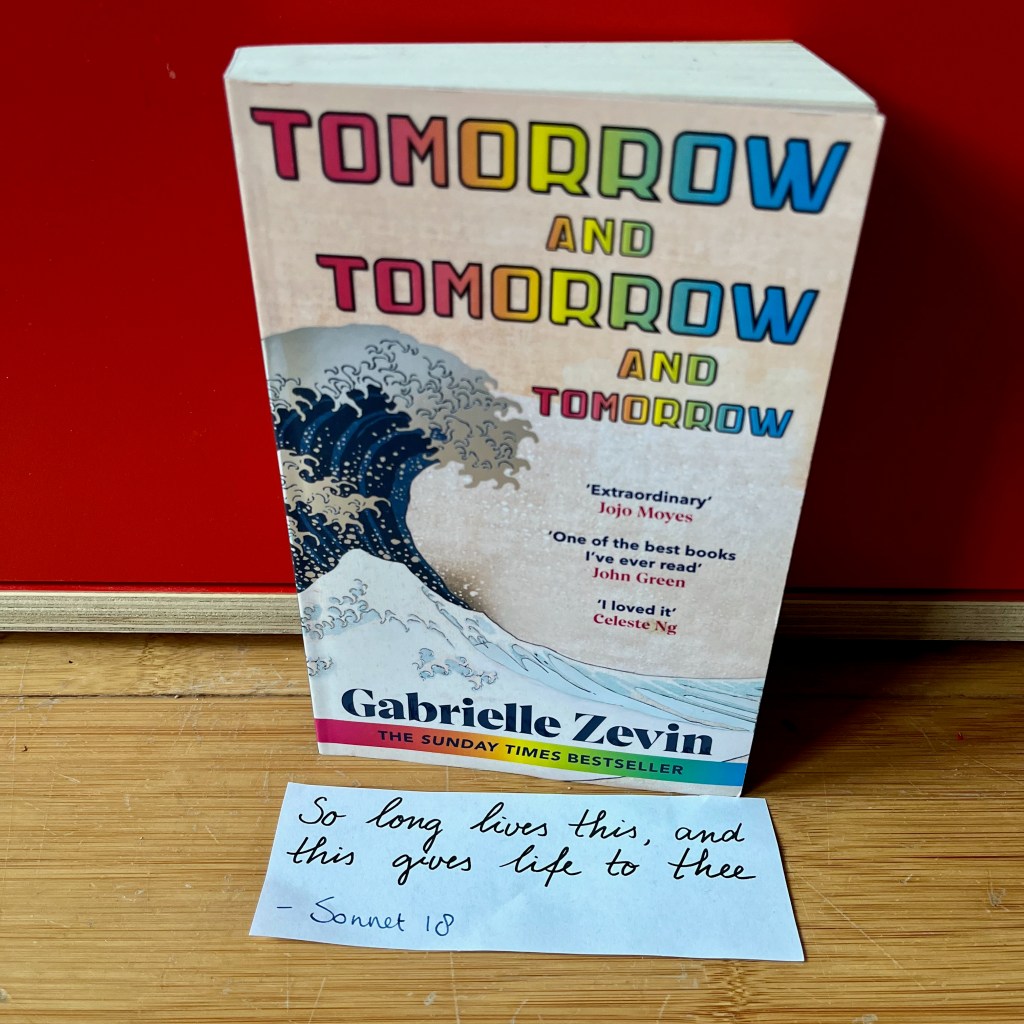
So long lives this, and this gives life to thee
Sonnet 18
Shakespeare knew that life is only temporary. However, in one of his most famous sonnets, he states that art is eternal, and incorporating a person into a work of art makes them immortal, too. This idea is repeated throughout the novel several times, for instance in the way Sam creates the mayor of a virtual world after his own image, or when Sadie inserts an Easter Egg in her Master of the Revels game, where a likeness to Marx will recite a Shakespeare monologue for all eternity. Or when Sadie travels around in a world created by Sam and stumbles upon a shed where someone who resembles Marx is still alive. This way, these characters will never grow old or die, or “thy eternal summer shall not fade”, as Shakespeare put it. Through gaming, especially the personal, autobiographical kind that Sadie and Sam create, they immortalise parts of themselves and of each other.
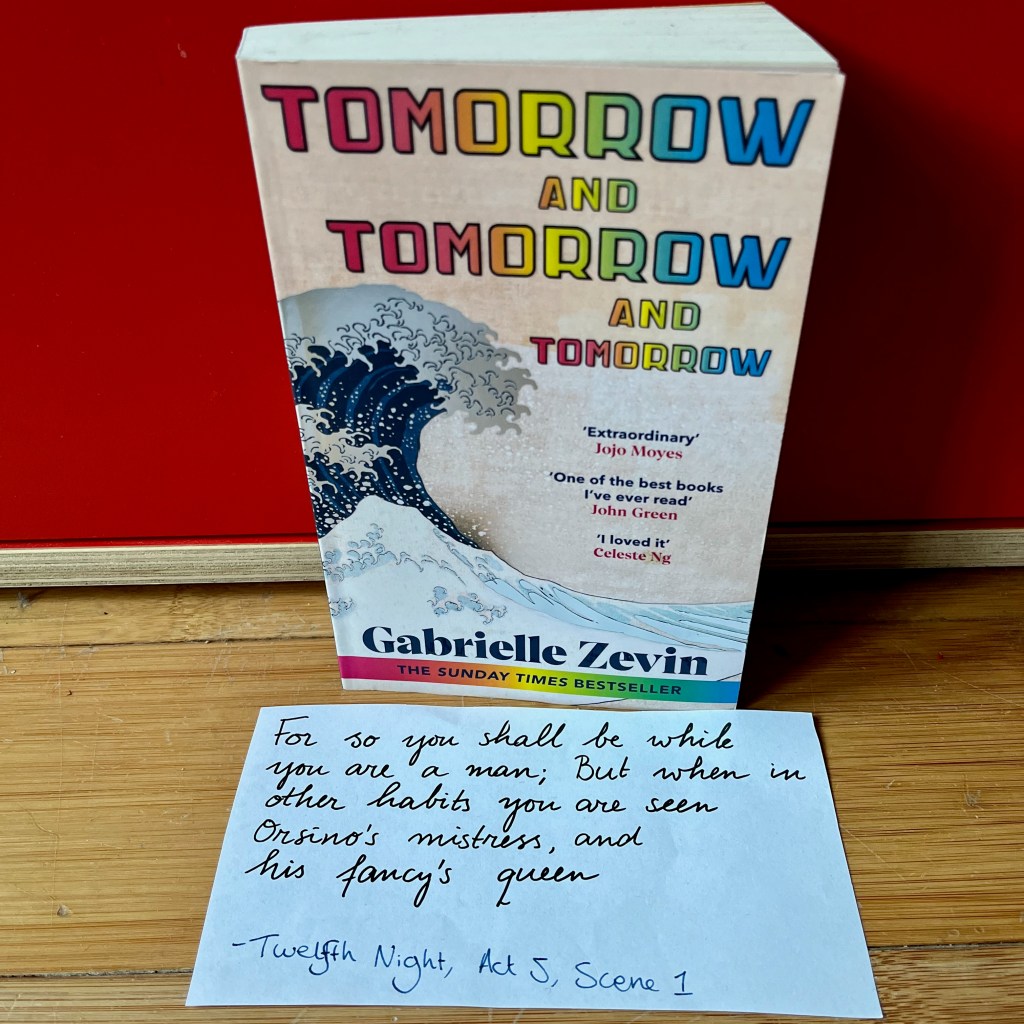
For so you shall be while you are a man; But when in other habits you are seen Orsino’s mistress, and his fancy’s queen
Twelfth Night, Act 5, Scene 1
Sam and Sadie consider themselves equal. However, back in Shakespeare’s day, women were not allowed to be actors, which means all parts were played by men. Shakespeare often played with this by having female parts change into men’s clothes, and then having people fall in love with them but struggling who it is they are in love with. The notion of gender is discussed in Tomorrow, and Tomorrow, and Tomorrow quite often, for instance when the eponymous character of Ichigo is first created as gender neutral because Sadie and Sam are convinced this is irrelevant. Furthermore, later on in the novel, when Sadie and Sam are fighting, Sadie plays a game designed by Sam, and she ends up becoming friends with a non-binary character and marrying a female one. Both characters, it turns out, were played by Sam, but neither Sadie nor himself clearly care about one’s gender (and this reflects Shakespeare’s play Twelfth Night, in which people keep dressing up and confusing others). These examples show that Sam and Sadie’s gender-defying games mirror Shakespeare’s ability to do the same in his plays.
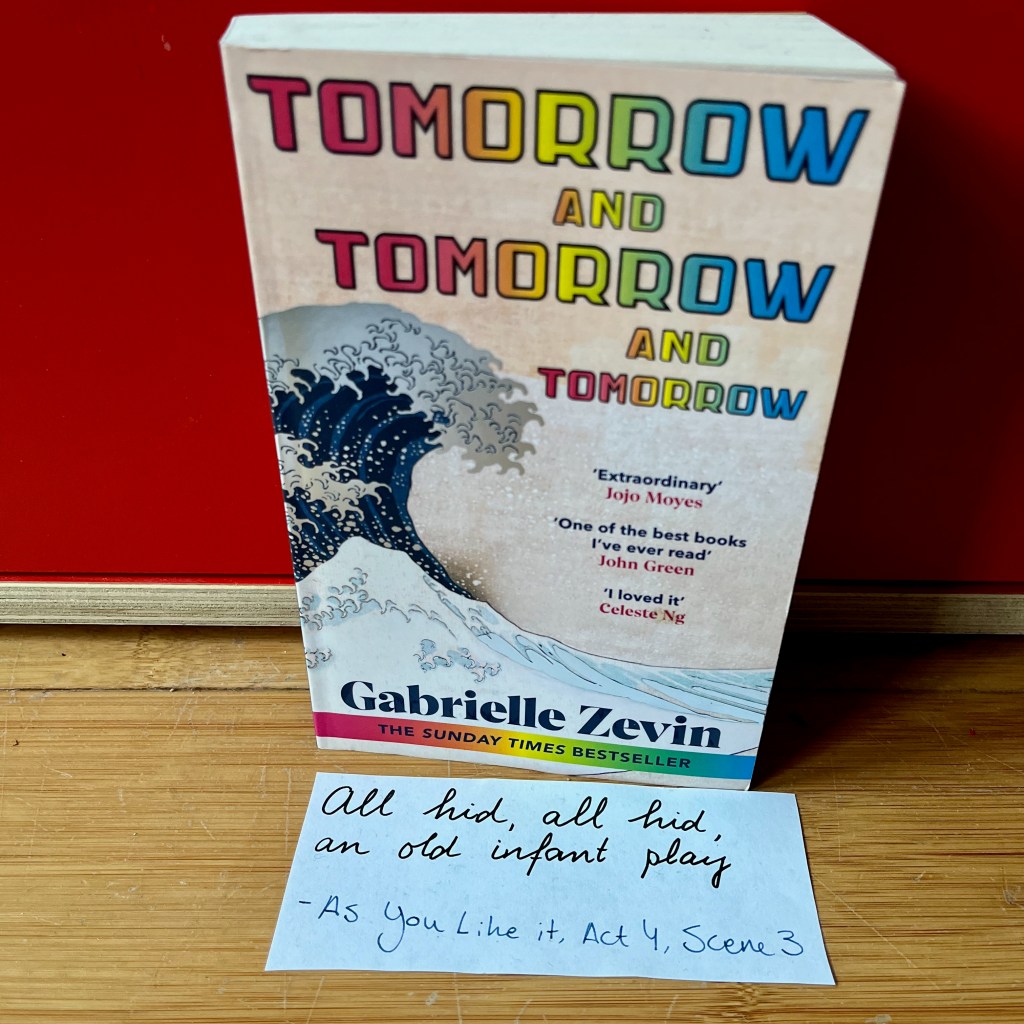
All hid, all hid, an old infant play
As You Like It, Act 4, Scene 3
Interestingly, Sam and Sadie are not the only ones creating games. Zevin herself played a game of hide-and-seek with the audience, too; she planted so many references to Shakespeare in her novel, that her audience (well, me) could not resist finding them all. They can be found in the title, of course (which is from Macbeth and is quoted in full in the novel), in Master of the Revels, the game Sadie designs about the playwright Christopher Marlowe, who lived at the same time as Shakespeare, and in the Shakespeare play Marx is in as a student. Furthermore, his play The Tempest, a violent storm, is often referred to, and the famous Japanese artwork The Great Wave off Kanagawa, which depicts a violent storm, is used for the title – as well as the starting point of the first game Sam and Sadie create together. Of course, there are many, many more examples to be found if one knows what one’s looking for.
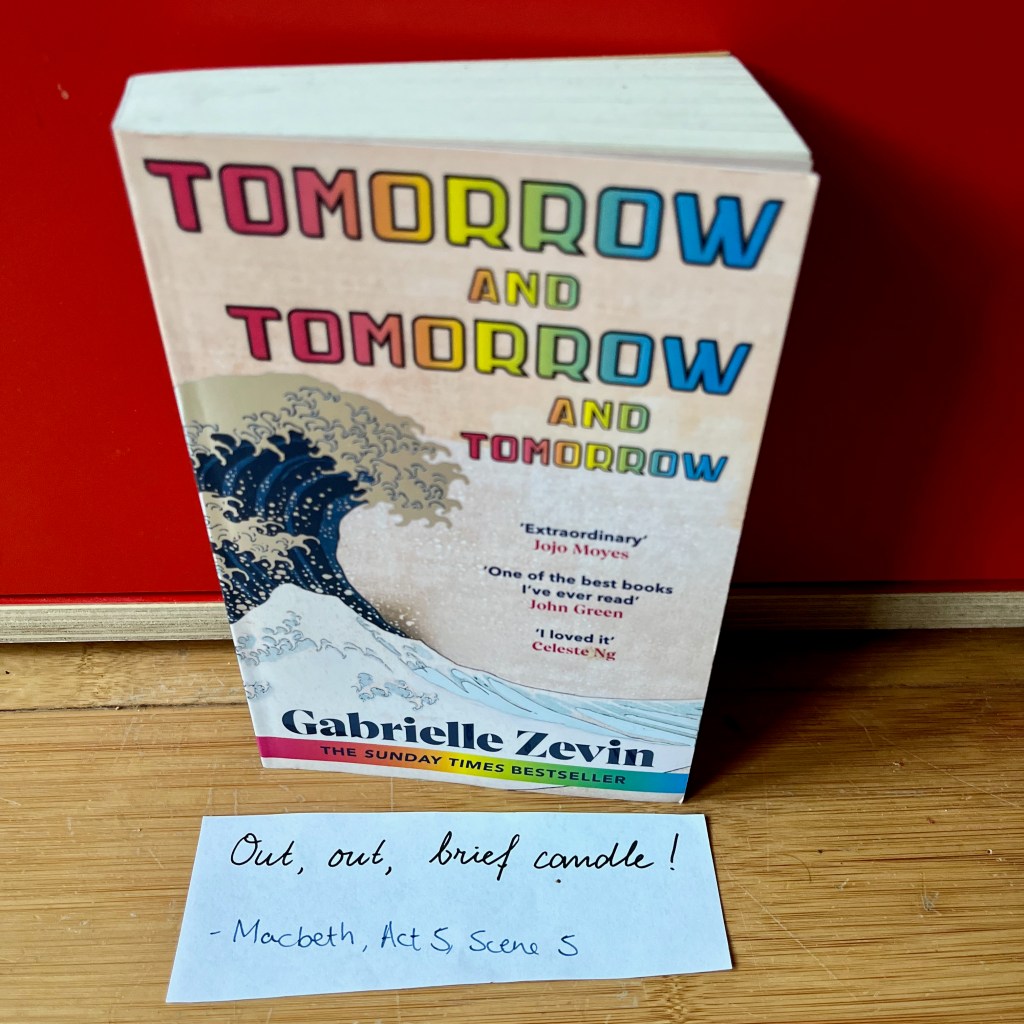
Out, out, brief candle!
Macbeth, Act 5, Scene 5
In conclusion, so much of Shakespeare’s work has been incorporated into Gabrielle Zevin’s novel Tomorrow, and Tomorrow, and Tomorrow, that finding textual references to the playwright almost becomes a game in itself. The novel is about life and death, about love and friendship, about betrayal, about sacrifice, about envy, about growing up, about secrets, about gender, and about playing games – basically what all of Shakespeare’s plays are about, too. Like I said, it is almost impossible to find a novel which isn’t partly inspired by Shakespeare – needless to say, Zevin was heavily inspired by him. And so his name, his language, and his stories are still used today. So will they be tomorrow. And tomorrow. And tomorrow.
What did you think of Tomorrow, and Tomorrow, and Tomorrow? Do you think every single novel you’ve read has something Shakespearian in it? What is your favourite Shakespeare play? Do you think Shakespeare is overrated? Please let me know in the comments! Also, don’t forget to follow me for more book-related posts! Oh, and I almost forgot, read more about Shakespeare here, here, and here!
 The Open Book