

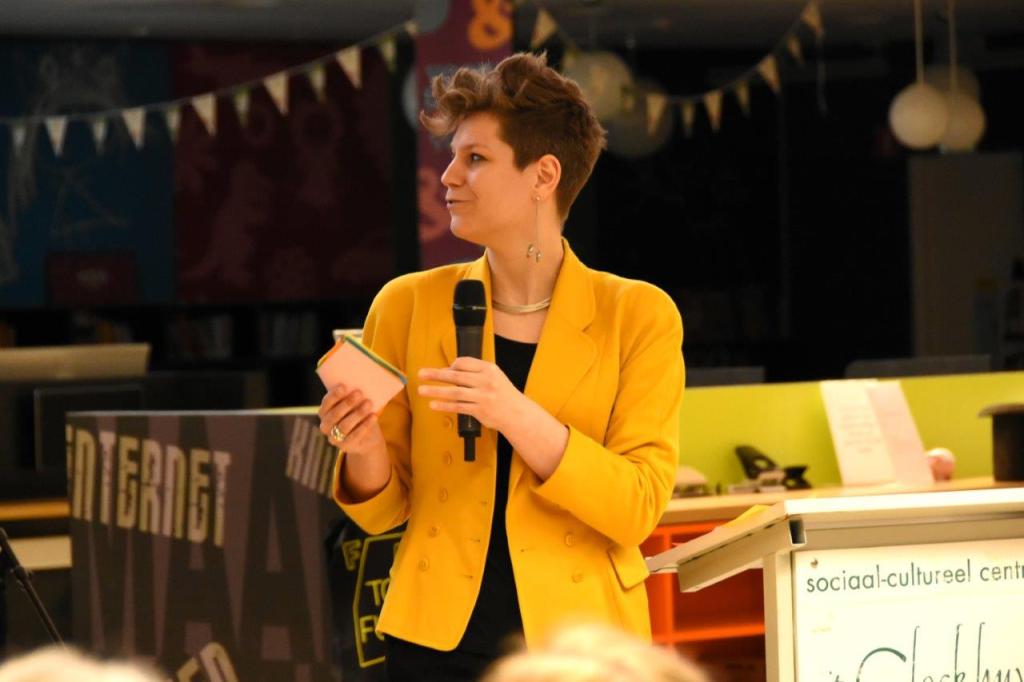
Charles Dickens was born on this day in 1812. Even over two hundred years after his death, he is still regarded as one of the greatest authors the English language ever produced. While not as popular in the Netherlands, there are still quite a few fans out here. I was asked to give a lecture to celebrate the great man, focusing on whether he ever used curse words or bad language. Want to know what I talked about? Read on!
What should one talk about when giving a lecture on Charles Dickens? So many things have already been said, of course. Thankfully, when I was asked to prepare this lecture, I was given a suggestion: how about talking about his offensive language? Somehow, after my performance at a literary festival, I had become a swearing expert. Since Dickens, a highly opinionated man on anything ranging from politics and society to other writers, people in general or food, I could no doubt find something on this topic, couldn’t I?
In a nutshell: no. And yes. No, because Dickens lived in the highly moralistic Victorian age, and cursing was a taboo. While many of us hardly utter any full-length sentences without swearing, and even more people enjoy watching movies that have more f-words than minutes in them, this was definitely not allowed in the Victorian Age. As a result, Dickens, obsessed with his audience’s good opinion as he was, hardly ever swore.
Part of the research for my lecture was collecting every single novel he had ever written and putting them all in one Word document. Loading these well-over three-million words took approximately twenty minutes, but looking up all the times he used words such as ‘damn’ or ‘devil’ lasted mere seconds. It turns out he didn’t use more than five-hundred rude words, which comes down to 0,016%, which is 1 rude word out of every 100 and comes down to one word every two-hundred pages. It’s quite impressive, isn’t it?
(Have you realized by now that my lecture, on the curse words of Charles Dickens, is virtually impossible to talk about, because he simply didn’t use any? I quite liked the irony of it, and my audience did too, after a while.)
Thankfully, Dickens didn’t need any swear words to let others know he was not very pleased with something or someone. For instance, he thought the Americans were so boring that “no man can form an adequate idea of the real meaning of the word without coming here.” Or somebody would “make a lovely corpse”. Or when Hans Christian Andersen came to stay at his house: “He stayed here for five weeks, which seemed to the family ages.” All of these insults are very beautifully phrased, but simultaneously pretty evil.

Next I talked about Oliver Twist, which is the rudest (if that’s the right term) of Dickens’s novels. In fact, Dickens said that this novel, which is about the eponymous orphan who, after many adventures in the poorer parts of London, ends up with a family, should be realistic, but the language should not be ‘offensive to the ear’. There are some ‘damn’s, a couple of ‘Devil’s, and even some blasphemy. Whew! At the same time, however, some things happen in Oliver Twist which would definitely be allowed nowadays. It is, for example, quite antisemitic at times, and there are instances of child neglect, violence against women and against animals. Oh, how times have changed. While Dickens focused on his proper use of language, we consider other things more important.
Do we live in a rough world, or are we more inclusive? Whatever the answer is, whenever it comes to Dickens, everyone is on the same page: there shall be no curse words in his works. Most modern (movie) adaptations face severe criticism because beloved characters utter swear words that they did not use in the original edition. For instance, the BBC was flooded by complaints against Steven Knight 2019 Christmas Carol adaptation minutes into the first episode.
Dickens is on the one hand remembered for his glorious, sparkling language, especially when he intended to insult someone. On the other hand, he hardly ever used any swear words. Unfortunately, AI didn’t know this: last year, the Charles Dickens Museum sent a tweet about how #Dickens was blocked on Tiktok because it contained a rude word. If only he knew.
212 years ago, Charles Dickens was born. I gave a lecture in honour of his birthday. Afterwards, a lovely punch was served, based on the man’s own recipe. Three cheers for Charles!
What is your favourite Dickens novel? Which writer do you like for their insulting powers? Which literary topics would you attend lectures on? Please let me know in the comments! Also, don’t forget to follow me for more bookish posts!

 The Open Book