

I have a new bookshelf at the local library! Last month my fellow Boofluencers (a title I’m still not entirely comfortable with, seeing as I lack the necessary talent for social media and a decent following) and I were asked who of us wanted to have another go at curating their very own bookshelf. Somehow, I was the first to respond. That meant that, in between grading tests and teaching and talking to parents and preparing lectures and playing volleyball matches and writing blog posts (like I said earlier: poor me), also had to find out which twenty-five books would make it to the list, as well as recording a video about it. Want to know which books I picked? Read on!

The shelf works in exactly the same way as before. The way to spreak the news doesn’t. Last time, the social media expert filmed some awesome action shots (action being the operative word, obviously) of me reading or walking around in the library, but this time I also had to talk. Perhaps surprisingly for a teacher who spends her day talking at school but who also has quite a bit more to say once she’s come home, I did not enjoy having to face a camera and talk for two minutes about why I love reading so much. I told them I have a teacher of English, started the same sentence about three-thousand times without being able to finish it, and approximately fifty per cent of the shoot consisted of me laughing and being awkward. Still, however, the final product was quite ok. I think. Watch it here: https://www.instagram.com/theopenbook_byelke/
Anyway, about the books themselves. I was afraid I had already picked all of my favourites, which meant that I started worrying about whether I would be able to come up with the right books the second time around. I had decided that I would not pick the same books again, nor use any books by the same authors as before. The books had to be classics and modern books, they had to be books written by men and by women, and there had to be books by writers from all around the world. In short: my second bookshelf had to be a very diverse one.
Turns out, it only took me some ten minutes to finish compiling the list. These are the books I picked:
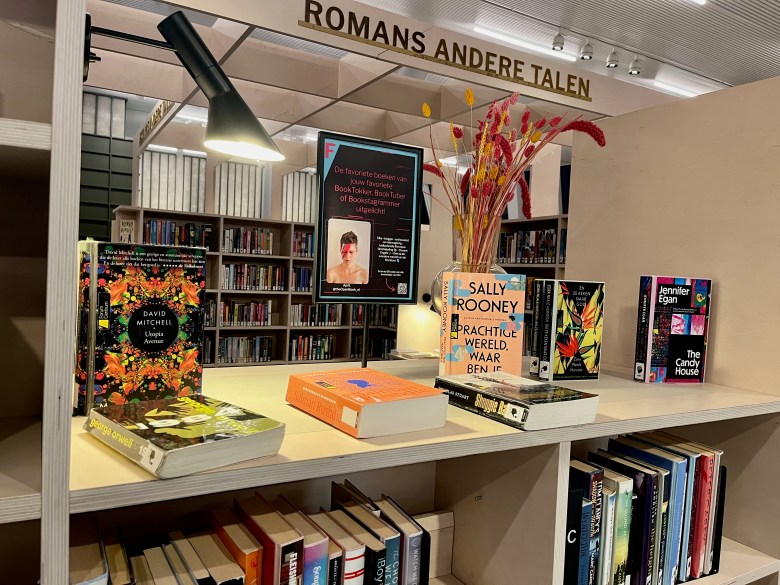
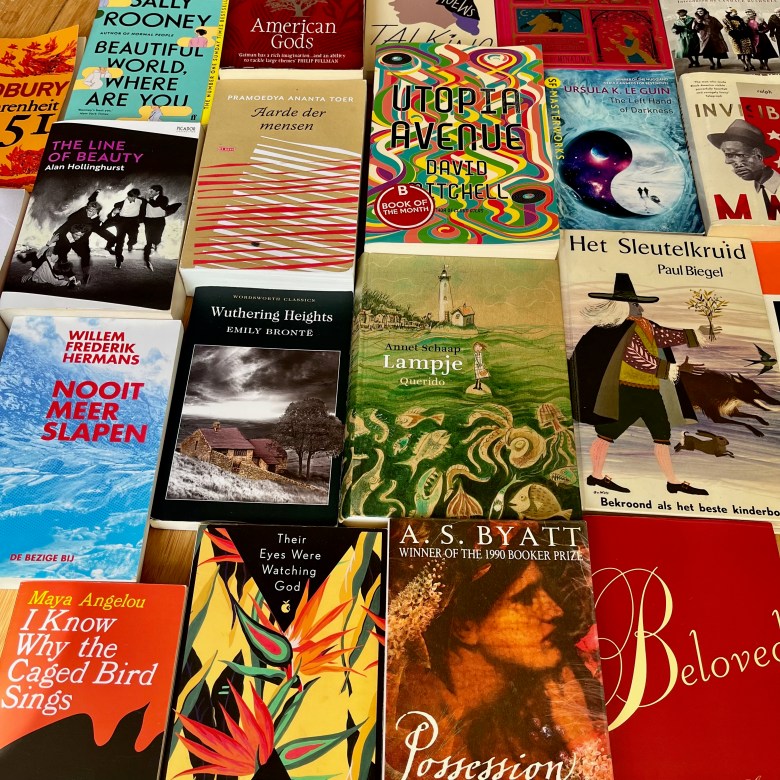
- Paul Biegel – Het sleutelkruid. An absolute classic in Dutch children’s literature. I loved the stories-within-stories and all the fairy tales.
- Willem Frederik Hermans – Nooit meer slapen. I love down-to-earth depressing novels. The Dutch are very good at them.
- Annet Schaap – Lampje. It’s a funny fairy-tale/mystery/coming-of-age story. Love it!
- Pramoedya Ananta Toer – This Earth of Mankind. Last week, I gave a lecture about this Indonesian novel. I hadn’t heard about it before, but I will now recommend it to everyone.
- Ursula K. LeGuin – The Left Hand of Darkness. A science-fiction classic by a woman, about a planet whose inhabitants have no gender.
- Ray Bradbury – Fahrenheit 451. Another sci-fi classic, about how people burn books instead of reading them. We discussed this novel last week in a book club (I’m working on a blog about it!)
- George Orwell – 1984. The last sci-fi classic, I promise! This one doesn’t need any explanation, does it?
- Emily Brontë – Wuthering Heights. Nature, Gothic, love and ghosts… What else does a book need?
- Toni Morrison – Beloved. A brutal novel about a Black family and a malevolent spirit in post-Civil War America.
- Zora Neale Hurston – Their Eyes Were Watching God. A coming-of-age story about Janie Crawford, and one of the most important novels in Black literature.
- Neil Gaiman – American Gods. Is it science fiction? Is it a road novel? Is it fantasy? Is it modern mythology? Whatever it is, it’s great.
- Jhumpa Lahiri – The Namesake. This novel is about an Indian family moving to America, and the cultural differences they encounter.
- Salman Rushdie – Midnight’s Children. It took me a month to finish this novel, but I think it’s still one of the best books I’ve ever read.
- David Mitchell – Utopia Avenue. I love books, I love the sixties, and I like its music. This novel has all of the above.
- Sebastian Faulks – Birdsong. I finished this novel about the First World War and its influence on the generations that came after it in one go.
- Maya Angelou – I Know Why the Caged Bird Sings. This is the first of Maya Angelou’s famous autobiographies, and it’s beautiful.
- A.S. Byatt – Possession. Literature, legacy and love are but three of the many themes in this intelligent novel.
- Jennifer Egan – A Visit from the Goon Squad. I once started writing a blog post about how Americans only seem to be able to comment on their society by writing a satire about it. This novel shows why.
- Marjane Satrapi – Persepolis. A feminist autobiographical graphic novel by Marjane Satrapi, who was born in Iran and wanted to get away.
- Lionel Shriver – We Need to Talk about Kevin. Gruesome and heartbreaking, this novel about a mother who has to come to terms with the fact that her son is a school shooter.
- Mary Shelley – Frankenstein. One of the most famous books of all time, inspiring countless other novels and movies. It’s about a scientist who wants to create life, but didn’t realise that was a mistake of epic proportions.
- Gabrielle-Suzanne Barbot de Villeneuve – Beauty and the Beast. Not like the Disney adaptation at all, this fairy tale about a girl and a monstrous beast.
- Jim Dodge – Fup. Raw, funny and oozing with life lessons on every page, this modern fable about two men and a huge, angry duck.
- Sally Rooney – Beautiful World Where Are You. Rooney has such an eye for modern relationships.
- Douglas Stuart – Shuggie Bain. This autobiographical debut novel about a young gay boy in the poorest areas of Glasgow was awarded the Booker Prize
- Ralph Ellison – Invisible Man. This novel made Ellison the first Black repicient of the National Book Award for Fiction.
- Alan Hollinghurst – The Line of Beauty. England in the eighties, where Thatcher, class differences, drugs, hypocrisy and AIDS all come together in the life of Nick Guest, a young gay man.
- Mary McCarthy – The Group. This sixties book about a group of female friends from the thirties reads like a contemporary novel.
- Miriam Toews – Women Talking. Based on real events in a Mennonite colony, the title is exactly the premise of this novel: women talking about what they are supposed to do next.
What do you think of the books I’ve picked? Have you read any of them? Did I forget any books? Which books would you pick? Please let me know in the comments! Also, don’t forget to follow me for more book-related posts!
 The Open Book