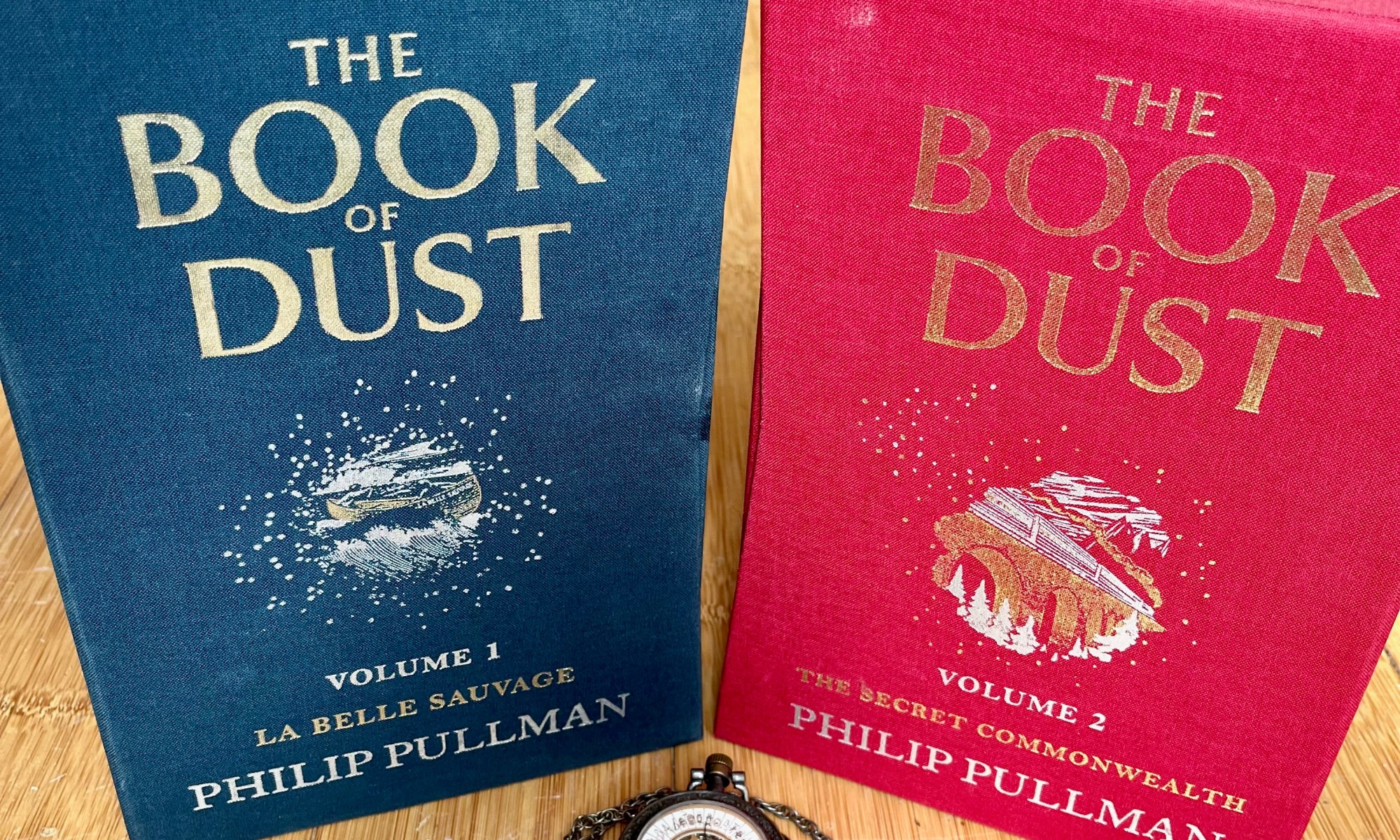

I saved the best for last. So far, I have not written about why I wanted to visit Oxford so desperately. Now, with this third and last stop of our tour, I want to show you my favourite Oxford, which is the city Philip Pullman describes in his His Dark Materials trilogy. These books, and the sequels which are still being written, have changed my life, and I wanted to be near its characters. Want to know what they’re about and what they say about Oxford? Read on!
Writing a summary about Philip Pullman’s novels is not an easy task. That’s because there are so many different layers in them. The most obvious one is about Lyra, a twelve-year-old girl who saves the world from the religious organization called The Magisterium and is aided by Will, a boy from another world. At the same time, it’s about growing up, about the end of the world and the start of another one, about love and loyalty, about the truth, about stories, about our consciousness (also called Dust in these novels), about science and religion, and so many, many more things. I reread them almost every year, and each time I dive deeper into this wonderful world and discover yet another layer.

What I love about Pullman’s novels is how, on the one hand, they’re part of the fantasy genre: it takes place in another Oxford, one which resembles ours but is also very different. For instance, humans have a so-called dæmon, which is a physical manifestation of one’s soul, shaped like an animal. However, on the other hand these novels comment on our own world. Pullman himself said, “After nourishment, shelter and companionship, stories are the thing we need most in the world.” His stories contains so many insights that everyone should be able to learn something from them. In fact, I think I could start a new blog in which I could write something new about His Dark Materials every day.
In these novels, there are locations in which the borders between one world and another are thinner, which allows one to travel between different universes. A part of me had convinced myself that the borders between Lyra’s world and our own would be thinnest in Oxford, which meant I would be able to see Lyra run around on the roofs of Jordan Collage (which we know as Exeter College), visit Malcolm from La Belle Sauvage in Jericho or in his parents’ pub The Trout (I still haven’t quite forgiven my mum that she didn’t want to go there – joking!) and find the alethiometer in the Bodleian Library.
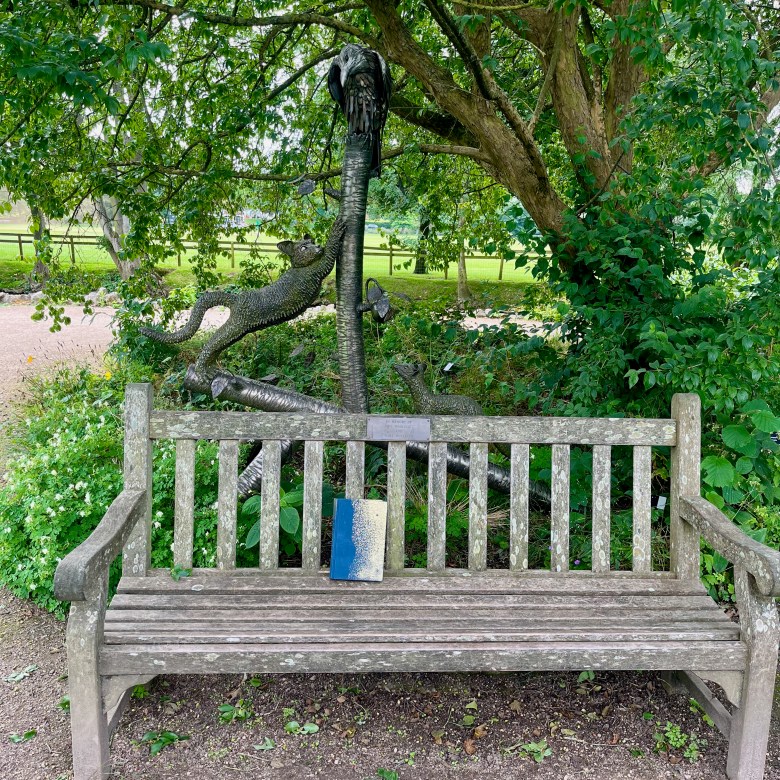
I created a walking tour in Oxford based on all the locations mentioned in Pullman’s novels, but which also included many buildings which could be enjoyed by those who haven’t read them (looking at you again, mum!) as well. We started in the Botanical Garden, where the wonderful conclusion of the first trilogy takes place, at a bench near the pond. That’s where it started for me. That’s where I felt I was close. I felt the books’ magic, and I felt that some part of me (was it my dæmon, perhaps?) had travelled to Lyra’s world. This was the Oxford I had been looking for; I had completed my goal.
I set out to be inspired by three different books, so I would be able to look at Oxford in a different light. Pullman’s Oxford is my favourite, but it’s also the most traditional one. Pip Williams and R.F. Kuang showed us an Oxford the world wasn’t quite familiar with; an Oxford in which women were more important than we were aware of, and an Oxford in which rich white men use people from other countries, as well as their language, just so they can get even richer. Lyra’s Oxford is ruled by white men and by the Church. Philip Pullman, by the way, is white, too. This could have been problematic, but fortunately, some of the many layers in His Dark Materials and its sequel The Book of Dust deal with feminism and xenophobia (the latter less obviously, however).
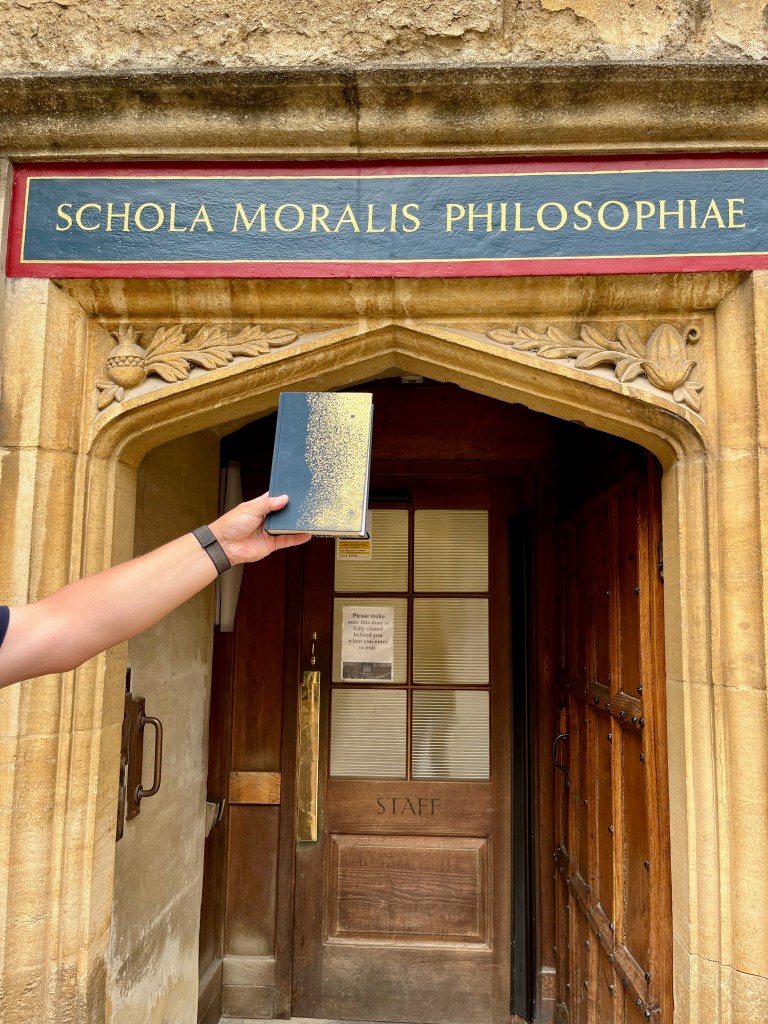
However, one of the most exciting layers in these novels is consciousness; slowly growing up and becoming aware of who we are, where we’re from, what’s important to us and what we want to fight for. My experience in Oxford changed because of the books I’ve read. I was able to enjoy the city for all the reasons others love it, but I kept thinking about what these books have showed me. I know what women have done for it, and I know that there are elements in its history that it is reluctant to discuss.
This could change my perception of Pullman’s novels. However, like I wrote earlier, there are so many layers that there’s something new to be found in them every time you read them – it’s like reading the alethiometer and trying to discover which of its endless interpretations you are trying to decipher.
I think Pullman would only encourage all of his readers to keep adding layers to his stories, and to his city.
What did you think of His Dark Materials and The Book of Dust? Have you ever read them? What would your dæmon look like? Which of the Oxfords I’ve discussed is your favourite? Which book shows yet another side of Oxford? Please let me know in the comments! Also, don’t forget to follow me for more book-related posts!

 The Open Book