

Do you celebrate Halloween? I don’t. That’s partly because we don’t really give any attention to this holiday, and partly because I don’t like horror. I don’t like blood, and I certainly don’t like being startled and afraid. That’s why this Halloween, I’m discussing a novel that could not be further removed from the horror genre. Or could it? Want to know what it is about this novel, Gender Theory by Madeline Docherty, that makes it kind of horror-y? Read on!
Gender Theory is written in the second person singular, which means it’s about “you”, a young woman who has a best friend named Ella. “You” tries to find out who she is by experimenting with boyfriends, girlfriends, alcohol, drugs, and so on. And then she also frequently visits the hospital because of an as-of-yet-undiagnosed pain issue, which puts a further strain on the friendship between “you” and Ella.
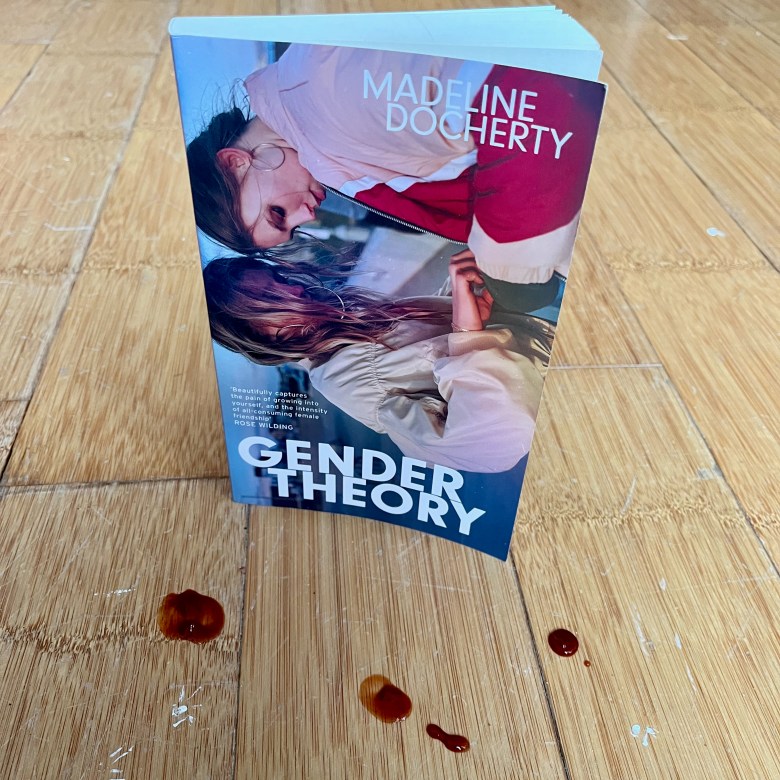
Nothing about this realistic novel seems to have anything to do with horror at all. However, it does share some themes and elements with this genre. Firstly, horror was used as a device to comment on society in a veiled manner; vampires draining a whole village dry represented the government taking money from the poor. Gender Theory uses devices from horror stories in an attempt to discuss taboo subjects.
Horror is a straightforward genre; something is either one thing or the other. Gender Theory, however, is a novel that breaks down clear boundaries and adds depth to each character. This is evident in the way “you” is described: she is attracted to both women and men, but she doesn’t care about this, because she is reluctant to let this define her. Her first girlfriend, however, is a staunch lesbian and attempts to smash the patriarchy. “You” adapts to her girlfriend’s ideologies, but it becomes clear that she borrows the identity of all of her partners, calling herself a chameleon – or, in horror terms, a shapeshifter.
In many horror stories, especially in horror movies, the audience is at the centre of all the action, and this is also the case in Gender Theory. The reader is continuously addressed as “you”, as though it’s not just the character going through certain things, but you are doing the same things. When I was in my twenties, my life was not like “your” life at all, but at the same time, I could definitely relate to her. I understood why “you” was afraid to speak out about her pain, and I get why she pretended to be someone else whenever she was in a relationship with someone. Meanwhile, I felt helpless all the time; the use of “you” makes you feel like everything happens, and you can’t do anything about it. I kept wanting to scream at “you” because of her poor decision-making, but of course “you” wouldn’t listen. It’s like watching a horror movie, and you know there’s someone at the other side of the door.
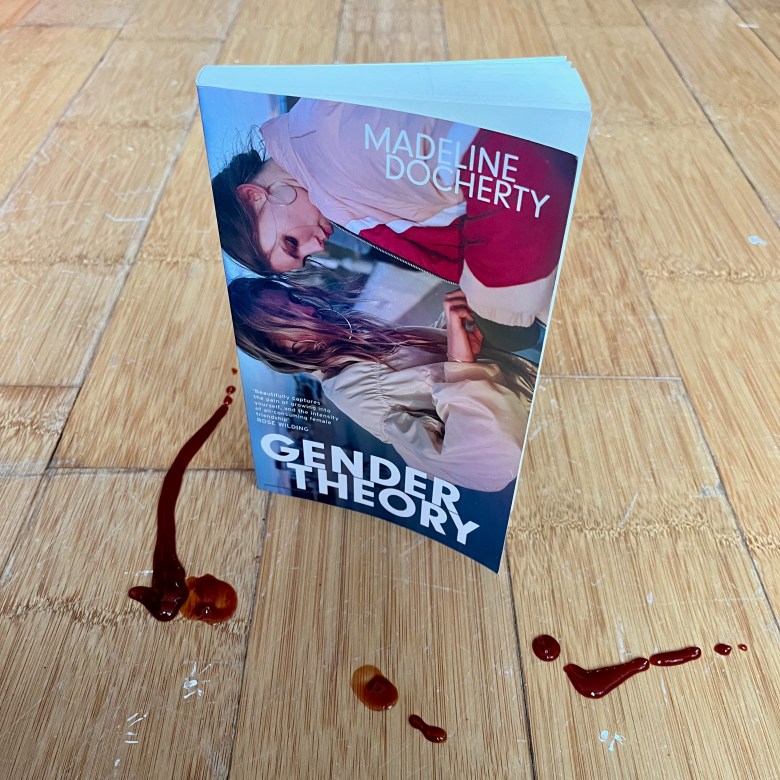
Another element that echoes horror stories is the deep friendship between young women. “You” and Ella are such good friends, that sometimes they wonder if it couldn’t be more than that. Whenever they’re together, nothing else matters – much like people in horror stories becoming obsessed with supernatural creatures. Things are always tense whenever one of them is in a relationship, because they notice the other starts behaving differently, which causes them to wonder whether they truly know the other. This insecurity and tension is felt throughout the novel, and you feel like something bad is bound to happen, just like in a horror story.
One of the most important elements of a horror story is blood. While nobody is killed in Gender Theory, it is a novel in which blood flows freely – and it is a feminine issue: endometriosis, a condition in which cells that usually line the inside of the uterus settle outside of it, causing a tremendous amount of pain during menstruation. After countless visits to the hospital, “you” is finally diagnosed with this disease, but not before many doctors failed to take her seriously. As a result, she is reluctant to tell her partners about it, and she is afraid Ella does not understand what she’s going through. Every time “you” menstruate, she is worried about stains she might leave on her clothes and on furniture, which symbolises how much this disease affects her life. This novel shows how much of a taboo endometriosis still is, but by writing about it, Docherty attempts to give it more attention.
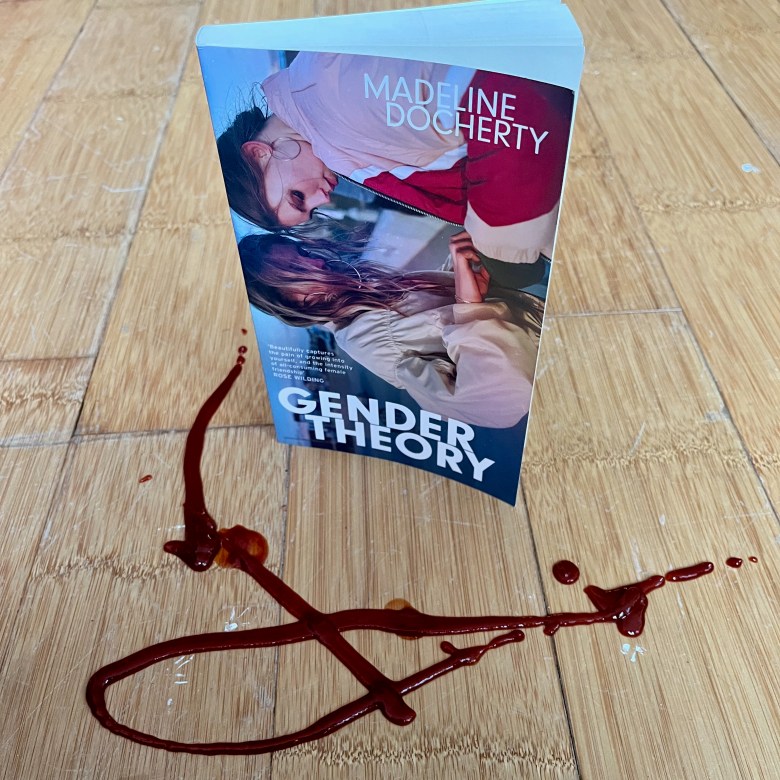
As mentioned before, horror stories used to be employed to comment on society. So does Gender Theory. It’s about how we’re always judging others because of what they do (to those who know me: yes, I am aware that I do that too, all the time) without giving any thought as to why they might behave in a certain way. It’s about how certain topics, such as (gender) identity, growing up, friendships, relationships, communication, pain, and physical conditions aren’t easy to discuss. Docherty’s novel shows that we should all try to listen to each other more.
It’s Halloween, that time of the year that celebrates horror stories. Earlier, people believed in supernatural beings, but we don’t anymore; today, horror is simply gory entertainment. However, novels like Gender Theory show us that we don’t need murder, brutal violence, or scary creatures to give us a good scare.
Growing up as a woman in our society – now there’s something truly scary.
What did you think of Gender Theory? Do horror novels scare you, or is it realistic ones like this one that keep you awake at night? What is the scariest novel you’ve ever read? Is growing up really that scary? Please let me know in the comments. Also, don’t forget to follow me for more bookish posts!

 The Open Book