


A couple of days ago, I was feeling quite ill. Usually, when call in sick for work, I spend my day on the couch in front of the tv, my laptop by my side so I could still do something useful if I wanted to. Whenever I’m ill, my world becomes very small. Thankfully, I read Samantha Harvey’s Booker-prize winning novel Orbital, which shows just how big and beautiful the world is. Want to know why? Read on!
Orbital is about six astronauts, two women, four men, who orbit the earth sixteen times every twenty-four hours. They watch a typhoon as it grows in size and power, they have to do exercises because of their weightlessness, and they think about why they became astronauts and what will happen to the earth now that we humans are on the brink of destroying it.
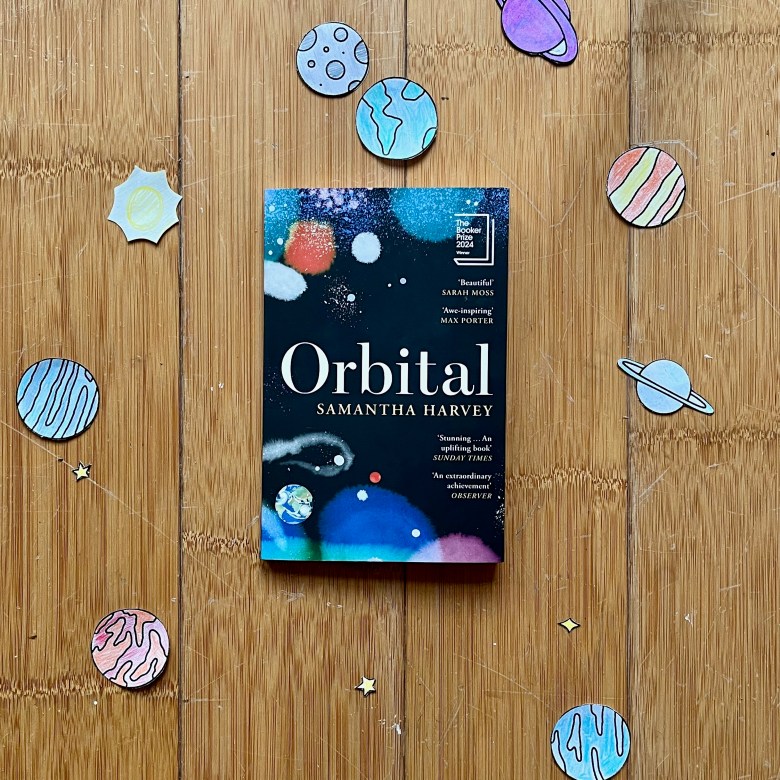
Although it’s only 136 pages long, it took me quite a long time to read it. That’s because it was quite an alienating novel. I didn’t feel very connected to it (it wasn’t this bad, though) – and not just because I was there, on my couch, motionless, while the astronauts were flying over my head so fast. No, it felt like strange to read this novel because the real protagonist of it wasn’t any of these six astronauts, but the earth ourselves. Our earth.
The novel takes place over the course of twenty-four, during which the astronauts see all the continents both by day and by night, and it’s so interesting to see how they experience this. When they first arrived at the space station, they loved watching the earth by night, because that’s when the lights go on, showing where people live. Later on, they prefer the earth by day, because it allows them to see the real, natural earth, as though humanity wasn’t there. However, one them soon discovers that almost every part of the earth is affected by people, for instance because of climate change or the fact that humans have tried to claim land from the sea.
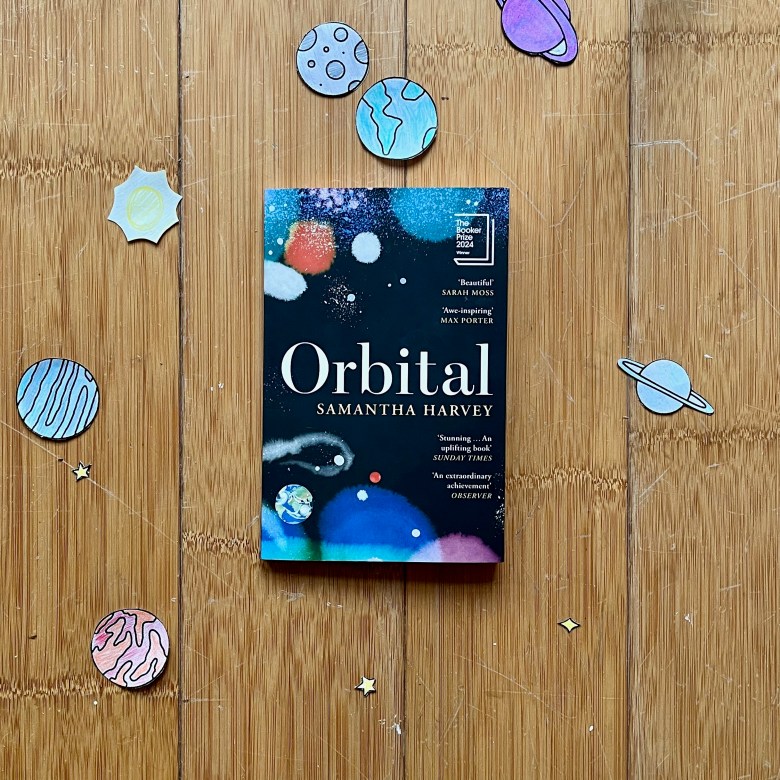
While I was sitting here on my couch, pretending I was travelling with these astronauts, I noticed that I was becoming more aware of what the earth means to me. I realised that I hardly spend any time at all thinking about our planet, which, after reading Orbital, is not fair. We should spend more time thinking about the earth and what we’re doing to her.
We currently live in the so-called, unnoficially termed Anthropocene. According to National Geographic, this means that we live in an era in which ‘humankind has had a significant impact on the planet’s climate and ecosystems’. In Orbital, the astronauts link the ever-growing typhoon’s path to destruction to an increase in such natural disasters. They also note the simultaneous launch of a rocket directed towards the moon, which means that humans will walk on the surface of the moon for the first time since the 1970s. The astronauts in the space station find themselves slightly jealous, because they’re ‘only’ orbiting the earth.
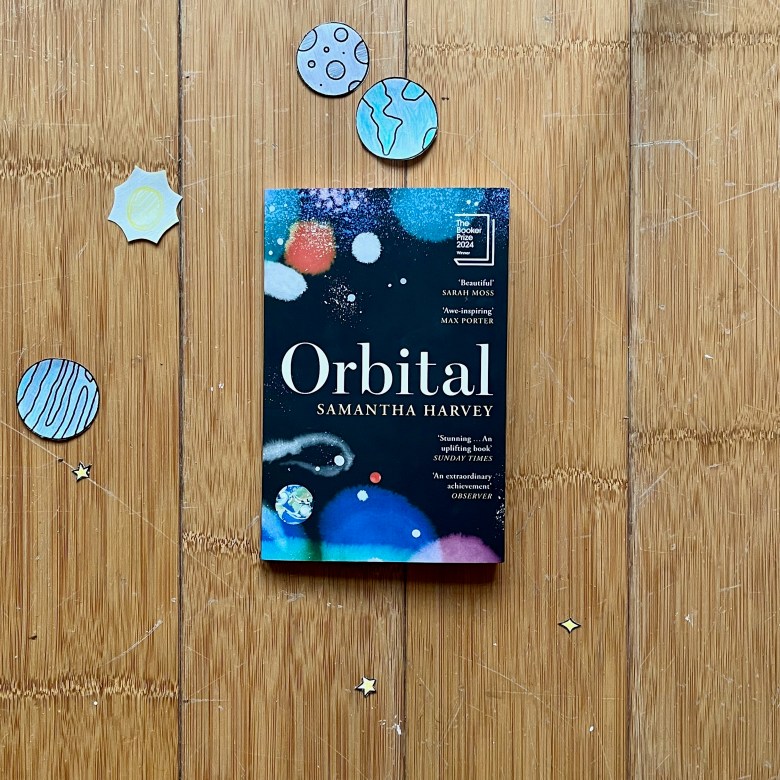
It is a very human flaw, it seems, to keep wanting more. A couple of days ago, I read an article in The Guardian which states that the World Monuments Fund has listed the moon on their list of threatened heritage sites. That’s because they’re afraid that an increase of lunar expeditions would damage historical sites on the moon, such as Neil Armstrong’s first footstep. Apparently, the earth has been fully explored, which means the moon is up next. Elon Musk has famously claimed that he is planning to colonise Mars.
One of the scenes in Orbital is about the Voyager, a space probe which carries a record that contains both natural and human pictures and sounds of the earth. If extraterrestrial beings would pick up this probe and play this record, they would get a clear idea of what the earth is and what we are proud of. (According to Wikipedia, Carl Sagan, who was on the committee to decide what would make it to the record, wanted to include The Beatles’ song Here Comes the Sun, which the band agreed with. Unfortunately, EMI, who held the song’s copyright, declined because they wanted to be paid. It is not clear whether this really happened, but it does showcase a certain tragic irony.) The novel states that the chance of anyone intercepting the Voyager is infinitesimally small. Apparently, hope still prevails over scepsis.
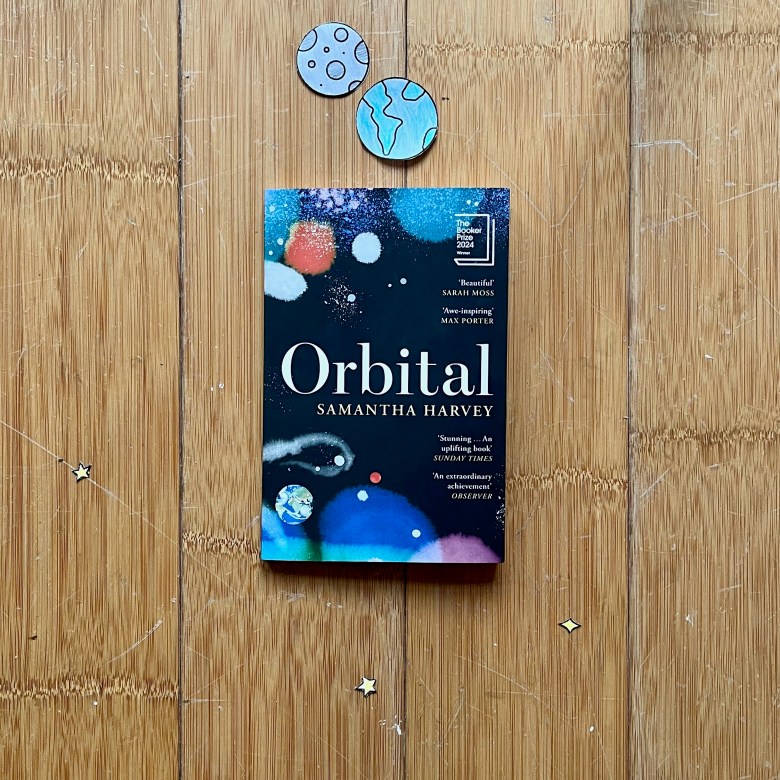
It turns out that Orbital is, in essence, a hopeful novel. Yes, the earth is slowly but surely being destroyed by human beings, and yes, climate change causes a clear increase in disastrous storms, but at the same time the astronauts are unable to make out any borders from their space station, and the earth is so beautiful from up there that they’re reluctant to go home. Usually, I’m quite pessimistic when I’m feeling ill. For quite some time, reading Orbital did not help alleviate this feeling, especially because my world had been reduced to that small spot on the couch. However, when I had finished the novel, I felt relief because there’s still so much beauty left.
Let’s hope that everyone will become just a bit more aware of just how special our earth is, so we’ll be more willing to fight to keep it safe.
What did you think of Orbital? Would you like to trade places with one of the astronauts? Do you think there’s reason to be hopeful about the future? Why? How can we help keep the earth healthy? What would you have liked to see included on the Voyager record? Please let me know in the comments! Also, don’t forget to follow me for more book-related posts!

 The Open Book