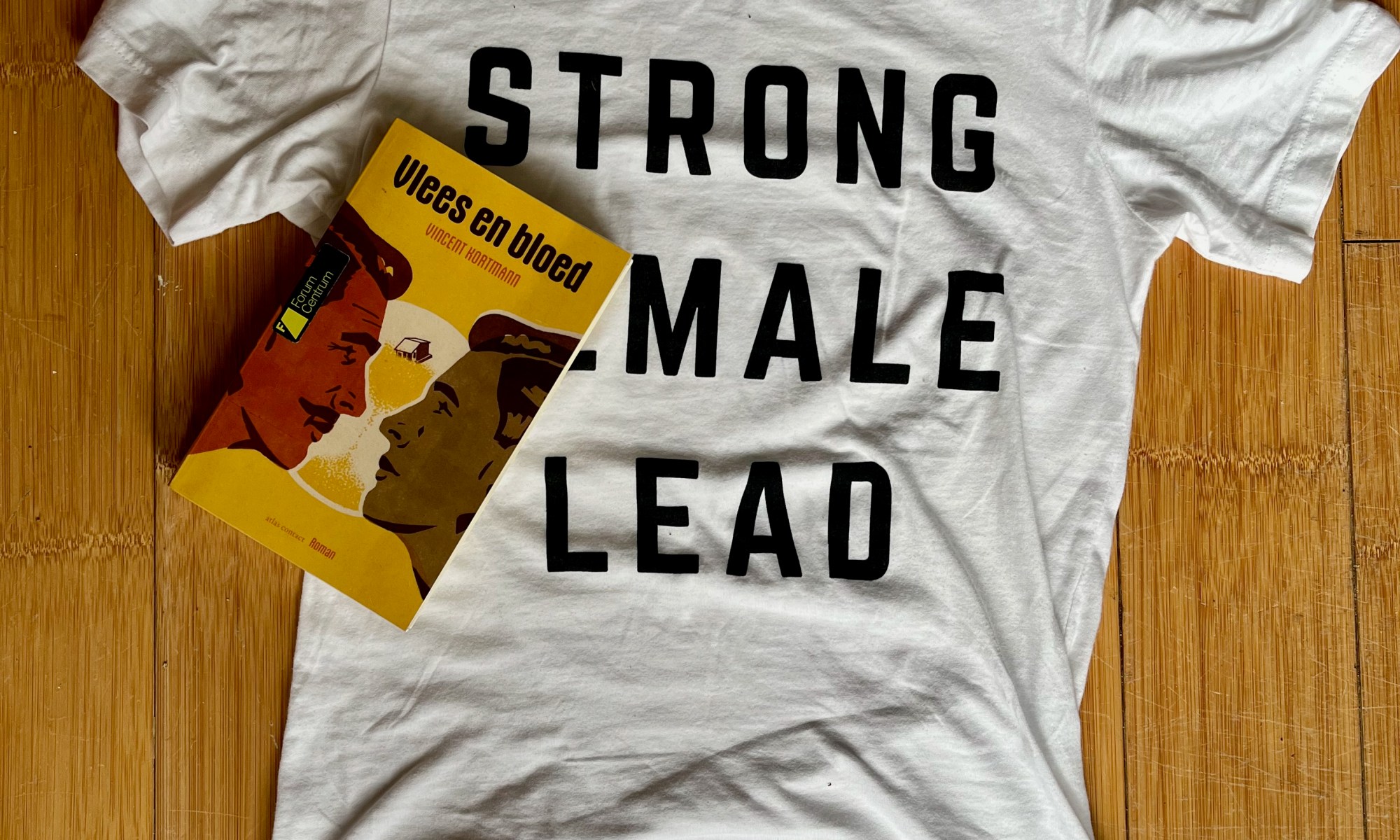

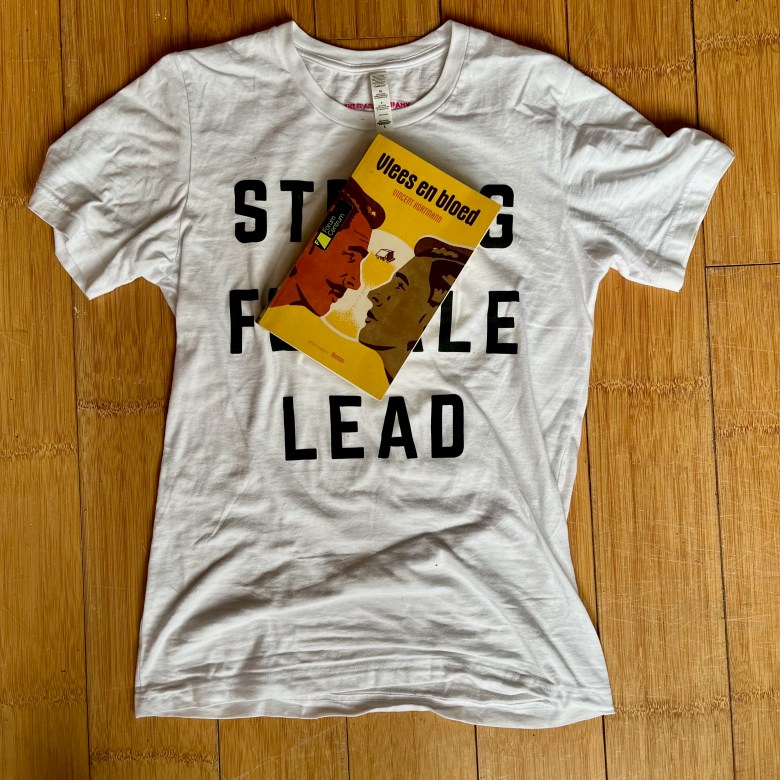
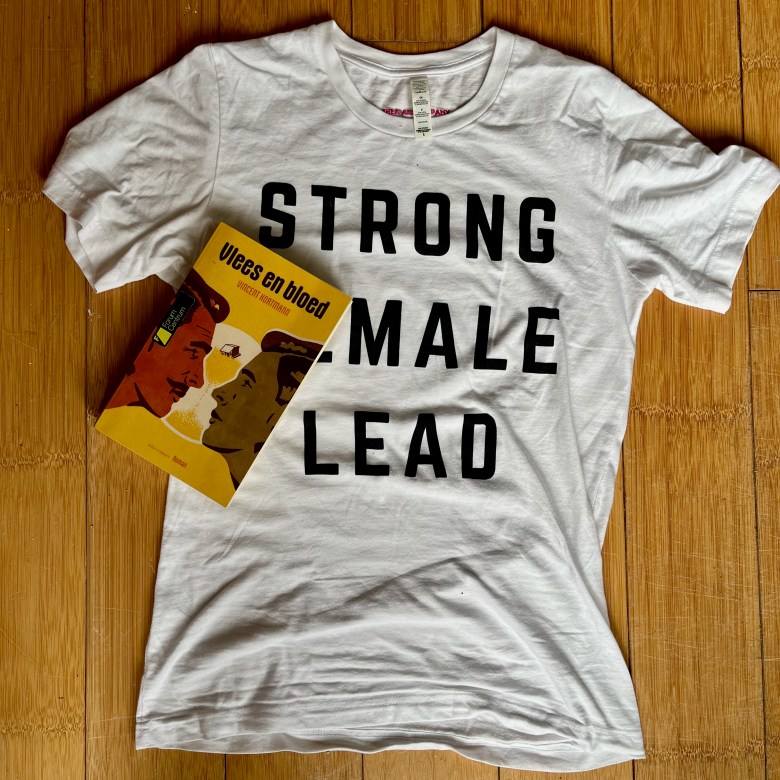
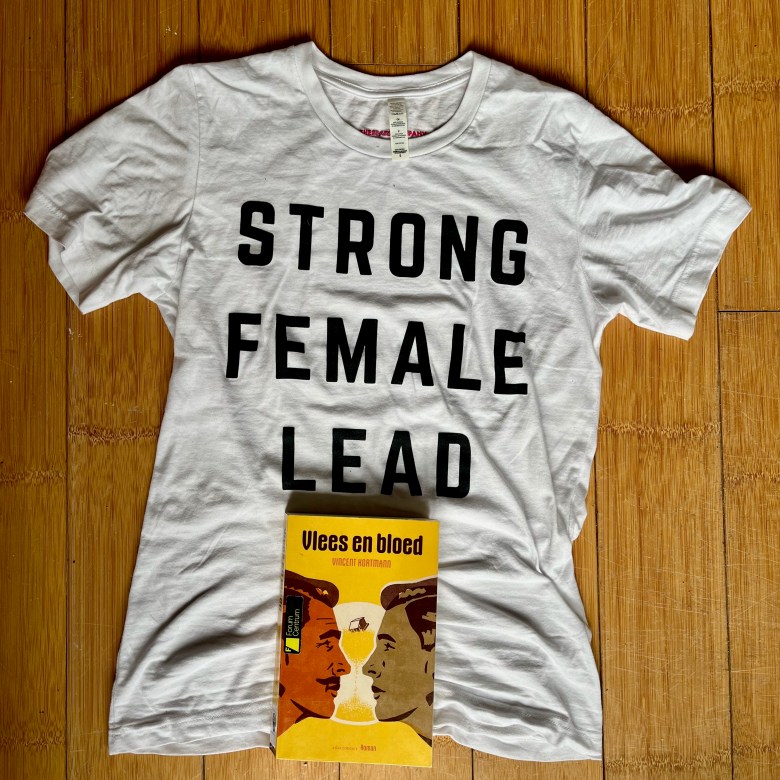
I promised I would make it up to you. In my previous post, in which I wrote about how awful I felt about having only read four novels by women this year – out of nineteen, I said I would read more feminist literature. Imagine how I’m feeling now, with the title of this post and two men on the cover of a novel written by a man. That’s because Vlees en bloed, by Dutch author Vincent Kortman, is so casually sexist I just had to write about it. Want to know why? Read on!
Vlees en bloed is about Victor Nordmann, a book auctioneer who has split up with his girlfriend after their baby died. Suddenly homeless, he moves back in with his father. Not used to talking about his feelings, he is suddenly forced to come to terms with the grieve he’s experienced, and continues to. This could have been a genuinely touching novel, if only it had been more female-friendly.

The story is told from the first-person perspective of Viktor, who, in 272 pages, goes literally mad with grief. In about 250 of them, he manages to say something sexist towards women. For instance, men are not supposed to cry, because they are strong. The Dutch word for nurse is ‘verpleegster’, which is a female word; obviously, only women are nurses, while most doctors are men. And speaking of nurses: he keeps imagining them naked. Oh, and his dad (who makes sausages for a living – now there’s a symbol for virility we’ve never encountered before) hires a so-called ‘girlfriend experience’, and Viktor manages to hire that same woman (nobody knows why) whom he is convinced is Polish, and she must walk around in tiny underwear all day long. Obviously, he doesn’t tell her about his dad. Creep.
It gets worse. There’s this scene where his father wants to go on holiday, and he keeps commenting on how pretty the waitresses are (there are no male waiters, obviously). Viktor then tells his dad he shouldn’t say that because he only objectifies them, after which his dad tells Viktor he’ll just leave her a big tip. Usually, I would be glad that someone comments on female objectification, but this time it just felt terribly hypocritical.
I am not the kind of feminist who only reads novels written by women, so I didn’t mind having to read Vlees en bloed for my book club. I usually also don’t object to reading novels with male protagonists. This time, however, I sighed and tutted in frustration so often that my boyfriend asked me what was wrong. I said it was too obvious this novel was written by a man, and it bothered me. I grumbled that its protagonist had no idea what it was like to be a woman.
One of the first things we know about Viktor is that he knows a lot about everything; he knows the capital cities of random countries, and he often wins pub quizzes. However, when he and his girlfriend are trying to get pregnant and she says something about her ovulation, he “obviously didn’t know what that was”. Really, Viktor? Did you not pay attention in Biology? Is basic knowledge about the female body beneath you, or simply too unimportant? Or, come to think of it, do you ever pay attention to what women are telling you? If you think this is bad, brace yourself, dear reader.
At one point, Mischa, Viktor’s ex, complains about how he’s lurking in the street where she lives. He says it’s ok, because he was there just once or twice. But no, the neighbourhood watch says he’s there all the time, which basically means he’s a stalker. Worst of all, however, is this one scene where Mischa doesn’t want to have sex with him because she’s grieving their son. Viktor gives her a massage to help her relax, but then starts kissing her. She says he should stop, but he continues, and the next day she says she feels assaulted. He writes down he doesn’t feel like an assaulter. And that’s that, it’s not mentioned ever again.
For a novel that’s supposed to be a funny but ultimately moving novel, this struck me as extremely distasteful. Yes, felt strong emotions, but not any Kortmann might have anticipated. I almost cried angry tears when I finally realised what it must be like to be a white man, oblivious to anyone else’s opinions or emotions, especially women’s. It must be great and liberating. Imagine what it would be like for women, if we were so self-obsessed. If Kortmann’s novel (the Dutch word kort means short, by the way, so I think there’s opportunity for a pun here) were written from the point of view of a woman, critics would probably hate it. They’d say she was a cold-hearted woman and obviously insane, and her husband should be happy to be rid of her. Now, because it’s a man, we’re supposed to think this kind of behaviour is funny.
I had to read this novel for my book club. I was planning not to be too harsh, but I failed miserably; within two minutes, I had already told everyone what I thought of it. Not everyone had noticed the sexist tone of Vlees en bloed at first, but eventually they could see my point. Some of them (all women, by the way; usually there’s one man there, but he wasn’t there that night – a pity, actually, because I wondered what he thought of Kortmann’s novel) would initially give it four out of five stars, but ended up giving only three at the most. I said I’d give it two stars, and not a single one more.
I said I would make it up to you. Will this review do?
What did you think of Vlees en bloed? Do you think there’s such a thing as casual sexism? Do you think I’m being too harsh? Are you bothered by sexism in fiction? Please let me know in the comments! Also, don’t forget to follow me for more bookish posts!
 The Open Book