

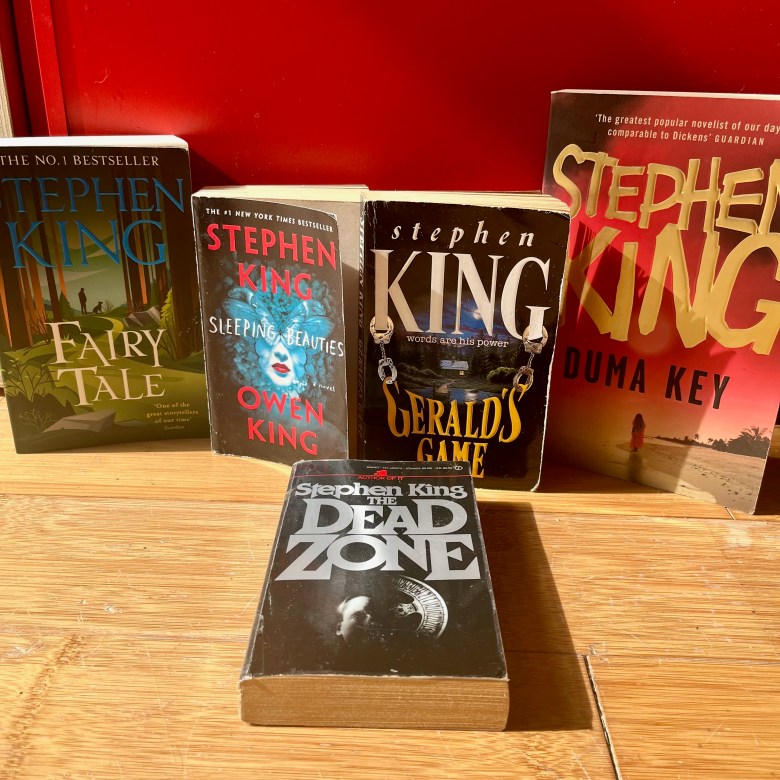
Six weeks ago, I was exhausted. So tired, in fact, I could hardly even read anymore, let alone write about the books I’d read. That’s why I decided to return to my massive pile of Stephen King novels, which always work wonders when I’m in a reading slump. And guess what, it worked. I enjoyed reading again – and I even found myself starting to analysing them. I thought there were quite a few things I could write about if I were to write a blog post about them. Want to know what I discovered about Stephen King’s novels? Read on!

I could, I thought, after finishing the fifth King novel, write about why Stephen King needs so many words to tell his stories. That’s because five books come down to almost three thousand pages, averaging approximately six hundred pages per book. I wondered whether his books would be as gripping if they were much shorter.
I also could, I thought, while being just as scared now as when I first read them, write about why Stephen King novels are so terrifying. While his books no longer keep me up at night (I have one memory from when I was reading It and one night my bladder almost burst because I was too afraid to go to the bathroom), I do had to look up occasionally while reading, sure I was safe in my own home, in broad daylight, and not in a made-up, monster-filled world. I could write about why I, and many others with me, have always secretively loved being scared, I thought.

I could, I thought, recognising them, write about important recurring themes in King’s oeuvre. That’s because he often writes about growing up, about alcoholism, about our inner demons, the lure of power and the notion of true evil. I could write about the darkness inside of myself and how it sometimes manifests itself, and draw parallels between this and one of Stephen King’s novels, I thought.
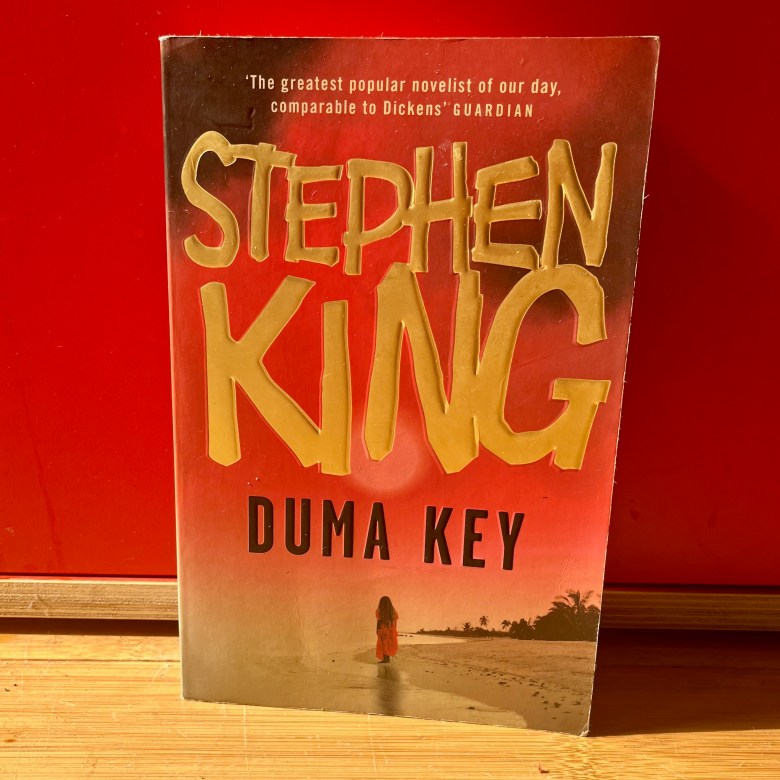
Or I could, I thought, looking up yet another song mentioned in a Stephen King novel, write about the constant stream of pop culture references. In every King novel, he mentions politics, songs (mostly seventies classic rock, interestingly), specific brands of food, and, most importantly, books. Sometimes that’s classic novels, such as those by Charles Dickens, sometimes King slips in one of his own novels, and sometimes – quite often, actually – it’s one book in particular. Ray Bradbury’s Something Wicked This Way Comes is mentioned in at least two of the books I’ve read, and they were written over forty years apart. I could compare Bradbury’s novel with King’s books and draw parallels between them, I thought. If only I had actually read Something Wicked This Way Comes.
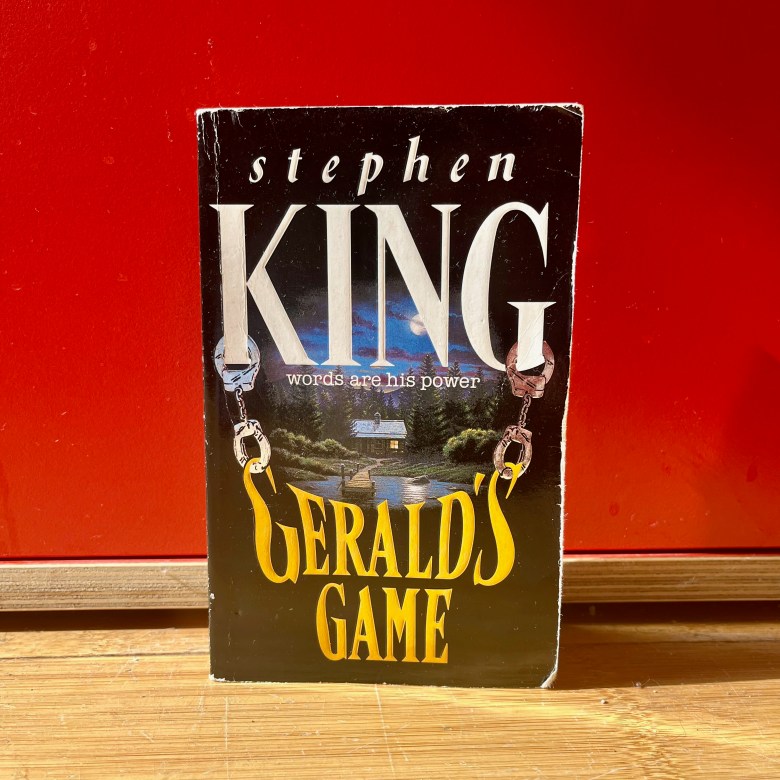
No, wait! I thought while reading Gerald’s Game, I could write about feminism. The novel focuses solely on Jessie, who is tied to a bed while her husband lies dead next to it, and there’s no way she can escape. She thinks about terrible events that took place when she was young, tries not to panic, and finds out she’s desperate to stay alive. While there’s plenty of horror elements in there (there’s a hungry dog and a truly terrifying man creeping around), what really stood out to me was one sentence quite late in the novel. It was about how people would not believe what happened to her, because she was a woman. I thought that was quite a feminist thing to say, especially by a male author who describes most women as being pretty or ugly. Then again, he dedicated this novel to his wife Tabitha and her five sisters. I could write about how Stephen King inserts some sort of feminist ideas in his novels, I thought. I should just read more of his novels and focus on feminism.

I could definitely, I thought, while reading Sleeping Beauties, write a blog post about feminism in Stephen King novels! That’s because in this novel, written in collaboration with his son Owen, all women – or more specifically, those with the XX chromosomes (which I think is a neat way of acknowledging the difference between sex and gender) – fall asleep and there’s no way to wake them up. We then read about what the world would be like if only men were left (violence, sex, theft, anger) and, on the other hand, what a world filled with only women would be like (not perfect, but definitely peaceful). It would be such an interesting idea to write about feminism in relation to Stephen King, I knew.
Six weeks earlier, I was too tired to think, focus, read and write. Now, I was on fire. There were so many things I could write about, and given time, I would attempt all topics. The feminist aspect really speaks to me, but I do think I need to read quite a lot more of his books before I can really decide whether it makes sense.
So that’s what I’m planning to do. I’m going to read more and write more, and enjoy it all a lot more. Thanks, Mr King.
See you soon, Stephen, I thought.
What is your favourite Stephen King novel? Do you recognise any of these themes I wrote about in this post? What do you read when you’re in a reading slump? Do you enjoy scary books? Which author do you consider a subtle feminist? Please let me know in the comments! Also, don’t forget to follow me for more bookish posts!
 The Open Book