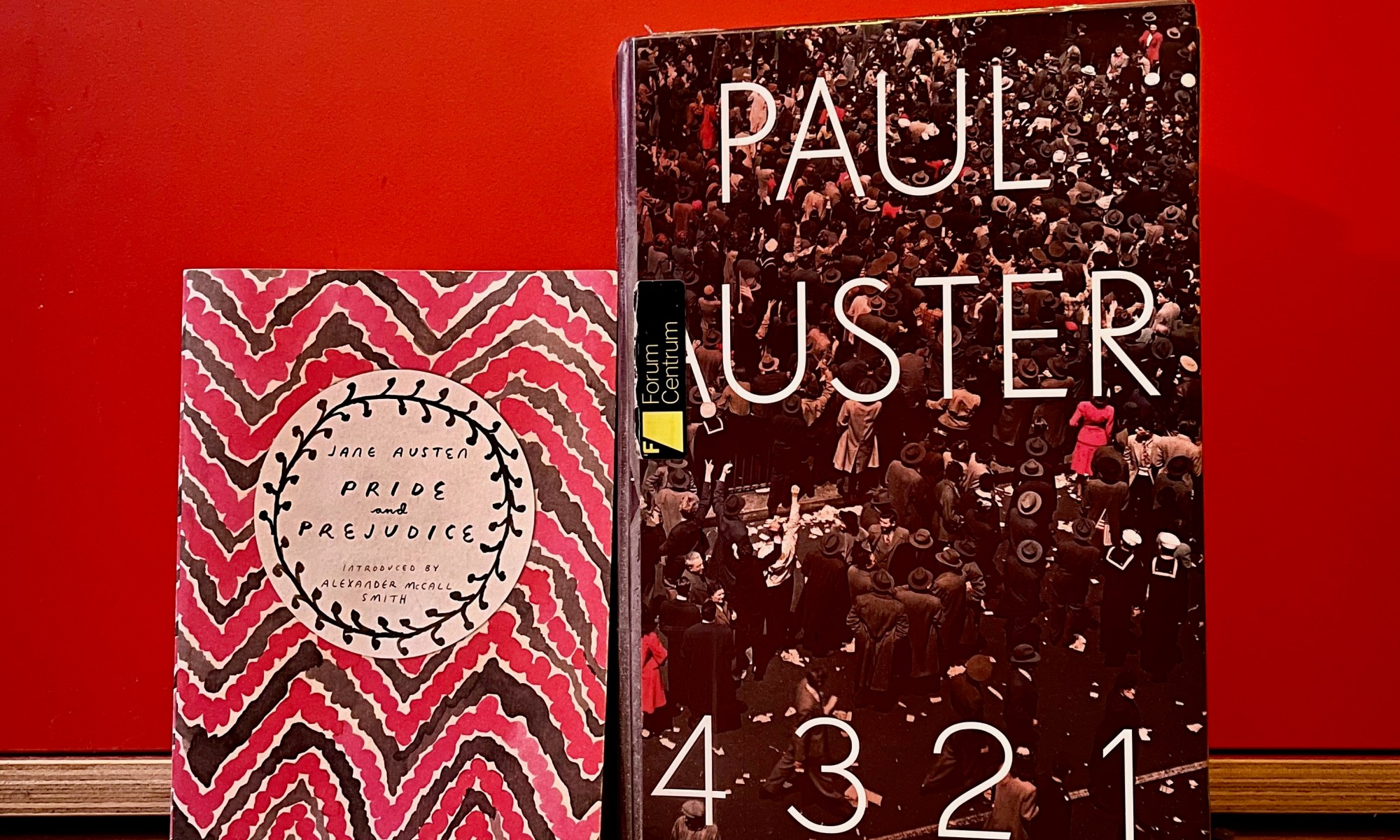

I never read two books at the same time. It distracts me, I get confused about which characters belong to which story lines, and I often find that once I exchange one book for the other, I never return to the first. This week, however, I made an exception. I was forced to swap Paul Auster’s epic 4321 for the classic Pride and Prejudice by Jane Austen, my book club pick. I keep worrying about mixing up these two. Want to know what that would be like? Read on!
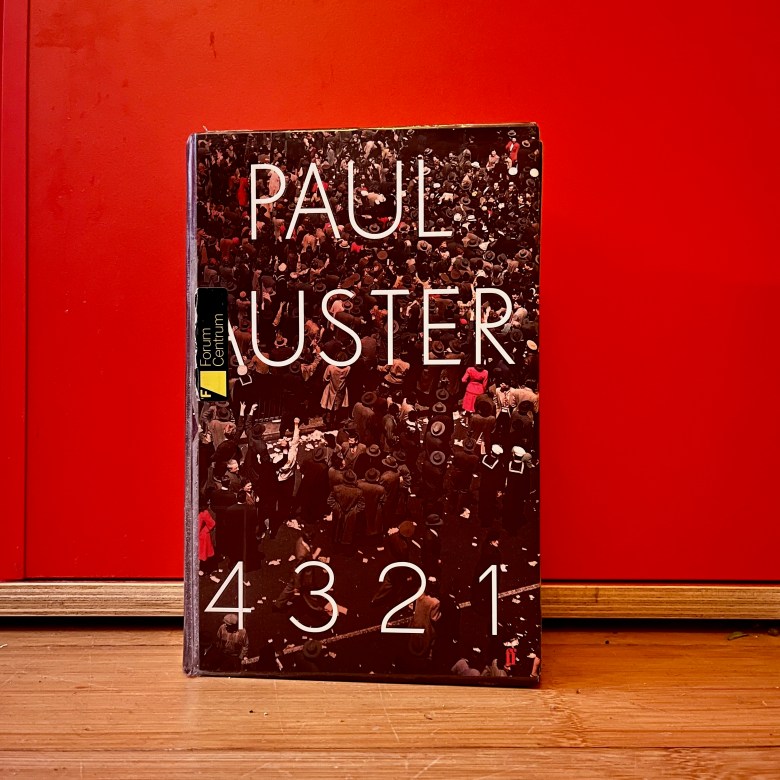
Apart from the authors’ names, which are so much alike you could easily misread them, there aren’t any similarities between 4321, a novel about multiple Archie Fergusons as he lives through the latter half of twentieth-century America, and Pride and Prejudice, a very British novel about Elizabeth Bennet’s search for love which she eventually finds in the haughty Mr Darcy. Impossible to mix them up? I think not.
Pride and Prejudice by Paul Auster. The defining aspect about 4321 is that it is not one story of one person, but several parallel ones; we follow Archie’s several lives as external circumstances change tiny aspects of his biography. What if his father or best friend hadn’t died, or if he hadn’t broken his leg, or if he hadn’t met this one girl? If Austen had followed Auster’s structure, Pride and Prejudice would have been unrecognisably different, for it would show all Elizabeth’s lives depending on the men she might have married, be it the odious Mr Collins, the untrustworthy Mr Wickham or the worthy Colonel Fitzwilliam, instead of Mr Darcy. It could have made for some very interesting notions on how women change for their husbands, or vice versa, of course.
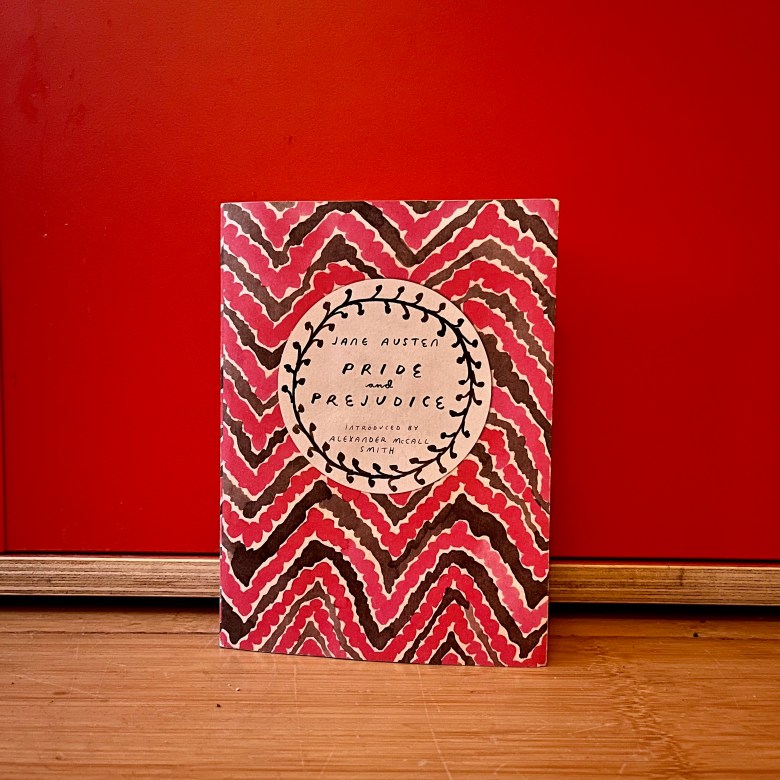
4321 by Jane Austen. However, if it were the other way around, I could see 4321 as a novel that is mainly about the search for love in very much the same way as Pride and Prejudice. Every incarnation of Archie finds a girl he likes at some point in his life, and it would have been interesting to see an Austenesque take on these matches; instead of Auster focusing on physical attraction (and female beauty), there would probably be a focus on their financial backgrounds and initial misgivings about each other, and whether they would really be suitable for each other or not, and why.
Pride and Prejudice by Jane Auster. I started reading Pride and Prejudice while I was halfway through a chapter of 4321 (now that’s something I really, really never do; one must always finish a chapter before closing a book!). What I really like about the latter novel is the historical and political background from the 1940s until – well, I don’t know yet – and how global events can change our lives. Even though it is very clear that Austen’s novel is set in Regency England, history and politics are of hardly any importance at all. I would have loved to see how the “real world”, if I may call it that, would have influenced Elizabeth in her search for love.
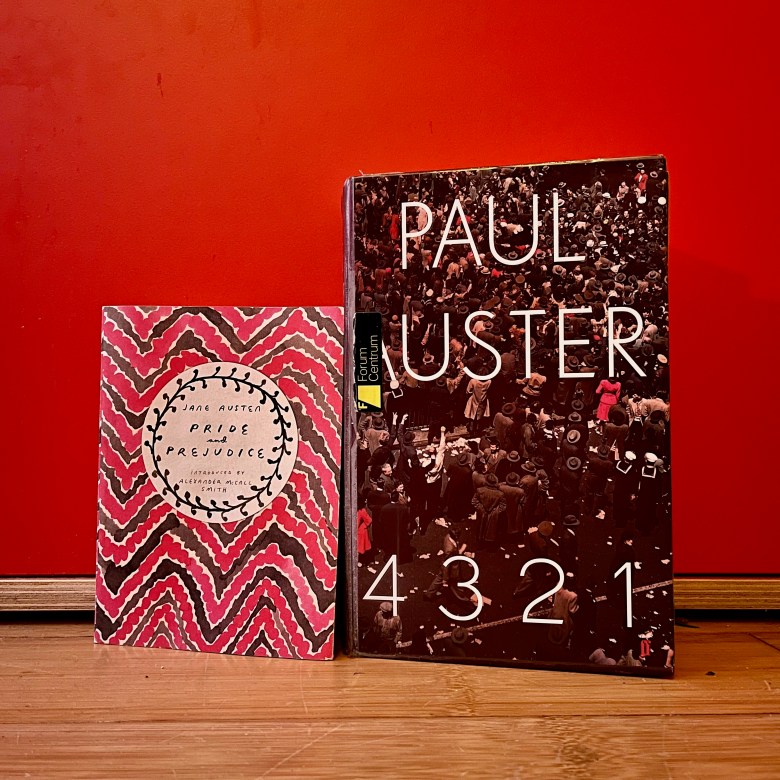
4321 by Paul Austen. What I didn’t expect about Pride and Prejudice is just how much of it is people talking to each other. Interestingly, the most important parts (for instance when Mr Darcy finally tells Elizabeth, albeit reluctantly, that he loves her) are written by describing Lizzie’s response to his words. 4321, on the other hand, reads more like several biographies, giving “factual” information about the fictional Archie and using hardly any dialogue. When I’ve finished Pride and Prejudice, I bet I’ll keep wishing that Auster used more dialogue, because the things we tell others say very much about ourselves, too.
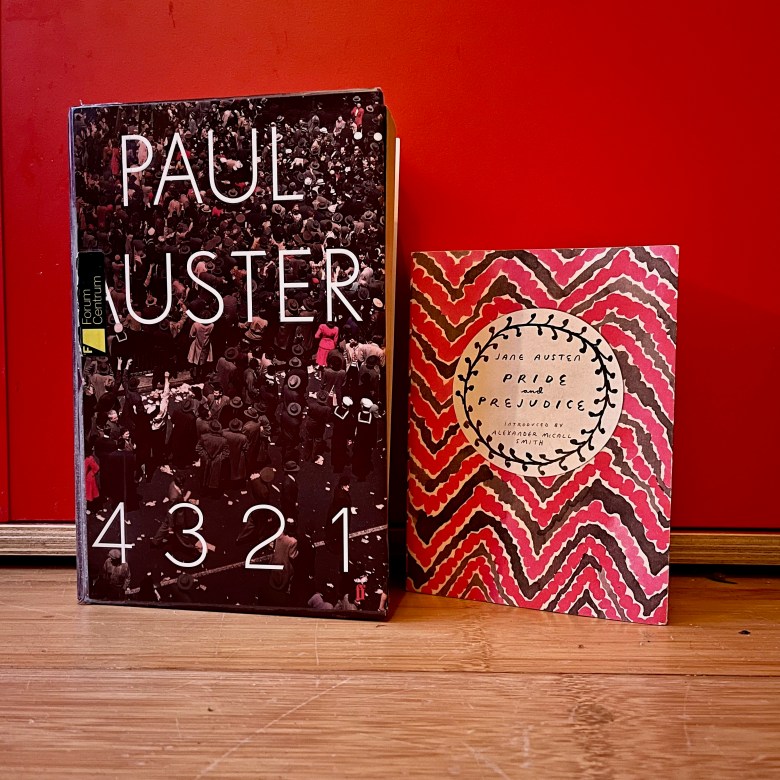
4321 by Paul Auster and Pride and Prejudice by Jane Austen. It’s been a couple of days since I finished Austen’s novel. I discussed it with my book club, drank some cocktails, and had a lot of fun. I have since returned to Auster. It turns out that I could never ever have mixed up these two books, partly because they’re in no way alike, but mostly, I realised, because one of them was written by and is about a woman, and the other by and about a man. That doesn’t mean that Pride and Prejudice is a female/feminine and 4321 a male/masculine novel, but I do wonder whether a man could have written Pride and Prejudice or vice versa.
But I will discuss that question at a later moment. First, I need to finish this one book. To think about two things at the same time would be quite confusing.
Have you read either of these novels? What did you think of them? Which of these would you prefer, you think? Do you ever read several books at the same time? Have you ever mixed them up? Do you think there’s such a thing as books for women or men? Which books would you like to blend together? Please let me know in the comments! Also, don’t forget to follow me for more book-related posts!
 The Open Book