

Our first stop on the Oxford Tour is the year 1914, as described by Pip Williams in her novel The Bookbinder of Jericho. It is about the First World War, but instead of focusing on the men in the trenches, she shows us the lives of the women, who had to fight their own battles. Do you want to know which ones? Read on!
The Bookbinder of Jericho is about Peggy Jones, a bookbinder at the Oxford University Press. It is up to her and her female colleagues to make sure that the books are folded and cut, while the men at the other side of the building set the letters. Peggy is intelligent and ambituous, but hasn’t gone to school since her mother died. She slowly realizes that the world is not a fair place, but things seem to change with the outbreak of the First World War.
Pip Williams’ novel is filled with feminist themes; it’s about how working women hardly had any right, about how mentally ill women were not really taken care of, it’s about women fighting for the vote which was initially only given to rich women, about education and about how women seemed to need a husband above all else. As with her previous novel, The Dictionary of Lost Words, Williams gives a voice to all those women whom nobody had ever listened to.

I am very interested in early-twentieth-century England. It was a time in which everything changed; unions were created, women were (literally!) fighting for their right to vote, and the idea that the world was ruled by rich white men was slowly dismantled. Especially when the Great War started and there were hardly any men left, it became clear that women are quite capable of taking care of things. In 1918, some women were allowed to vote, and in 1928, everyone over the age of 21 was allowed to vote.
Many of the events in The Bookbinder of Jericho really happened. All the dates are correct, as well as the historical figures featuring in it, and the descriptions of Oxford where Peggy and her autistic sister live and the pubs they frequent. However, Williams made a very conscious decision to incorporate the fictional characters from her debut novel into this one. To me, this felt a bit redundant. That’s because part of this book is based on facts, and Williams has clearly done a lot of research on how it must have been like to live in Oxford in 1914. On the other hand, it almost felt like her own made-up characters were sometimes more important than the historical events that take place in the novel. While reading, I often wondered why she chose to do this, because it felt less realistic to me.
I had finished this novel a couple of days before I went to England. Despite my full suitcase, in which I had put many of my loveliest clothes, I managed to cram The Bookbinder of Jericho, because I wanted to take pictures of it when we visited Oxford. When we arrived at the University Library, I noticed an old printing press, which obviously made me think of Peggy and all the other nameless women who used to work at the Oxford University Press (which we walked past, of course). We also visited Jericho, the poorer neighborhood of Oxford where the workers of the Printing Press lived, and had some food and drinks there (believe it or not, we went to a pub called The Old Bookbinders Ale House!).
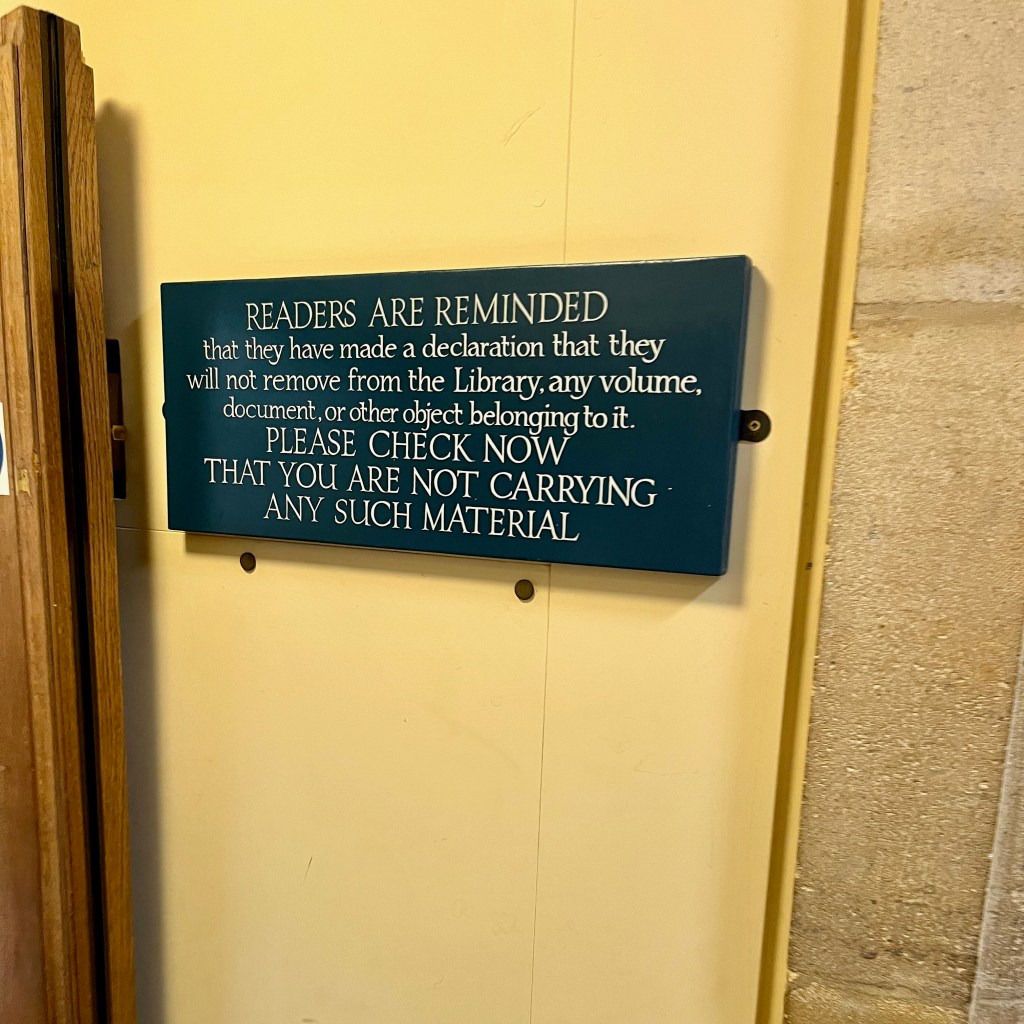
While walking through Oxford with such a huge smile on my face that the guide at the Bodleian Library told me that my happiness gave her such enjoyment, I realised that The Bookbinder of Jericho showed me an Oxford I had not been aware of before. It was women who ensured the Oxford University Press could continue publishing books during the First World War, and I had no idea. Walking past all those glorious colleges made me realise that those buildings had been inhabited solely by men for over seven hundred year before women were allowed to study, and the first female student was matriculated only slightly over a hundred years ago. I would not have known this if I hadn’t read The Bookbinder of Jericho.
In short, Williams’ novel shows us a female Oxford. It shows us how the entire city, despite its history having been written by white men, always needed women, all those nameless women doing their jobs and fighting for their rights. We don’t know who they were, but at least we know they existed.
What did you think of The Bookbinder of Jericho? Do you like historical fiction? Do you think women should write their way into the history books? Which historical women, both real and made-up, would you like to know more about? How does this novel show you a different side of Oxford? Please let me know in the comments! Also, don’t forget to follow me for more bookish posts!
Next up in the Oxford Tour: Babel by R.F. Kuang.

 The Open Book
And thee you left of the name of the pub we went to. At least without mentioning it explicitly as the name of a pub. But then again. The name of this blog is exactly the same.
LikeLiked by 1 person
Oh, how stupid of me! I’ll add it straightaway!
LikeLike
And thee you left of the name of the pub we went to. At least without mentioning it explicitly as the name of a pub. But then again. The name of this blog is exactly the same.
LikeLiked by 1 person