


Every May, I go on a school trip to London. While the programme doesn’t usually vary much (we walk a lot, visit the highlights, and go to museums and a musical), this year it felt very different. That’s because last week, we realised that it was one hundred years ago to the day that Virginia Woolf’s masterpiece Mrs Dalloway was published. To celebrate this anniversary, I wanted to find out whether my pupils could follow in Woolf’s footsteps while in London. Want to know whether they did? Read on!
Mrs Dalloway is about the eponymous middle-aged upper-class lady who is preparing for a party she’s hosting that night. While doing so, she walks around in London and thinks about the life she’s lived and the decisions she’s made. Simultaneously, one of her friends and a shell-shocked soldier also consider their lives and current situations, which eventually leads to the tragic demise of one of them.
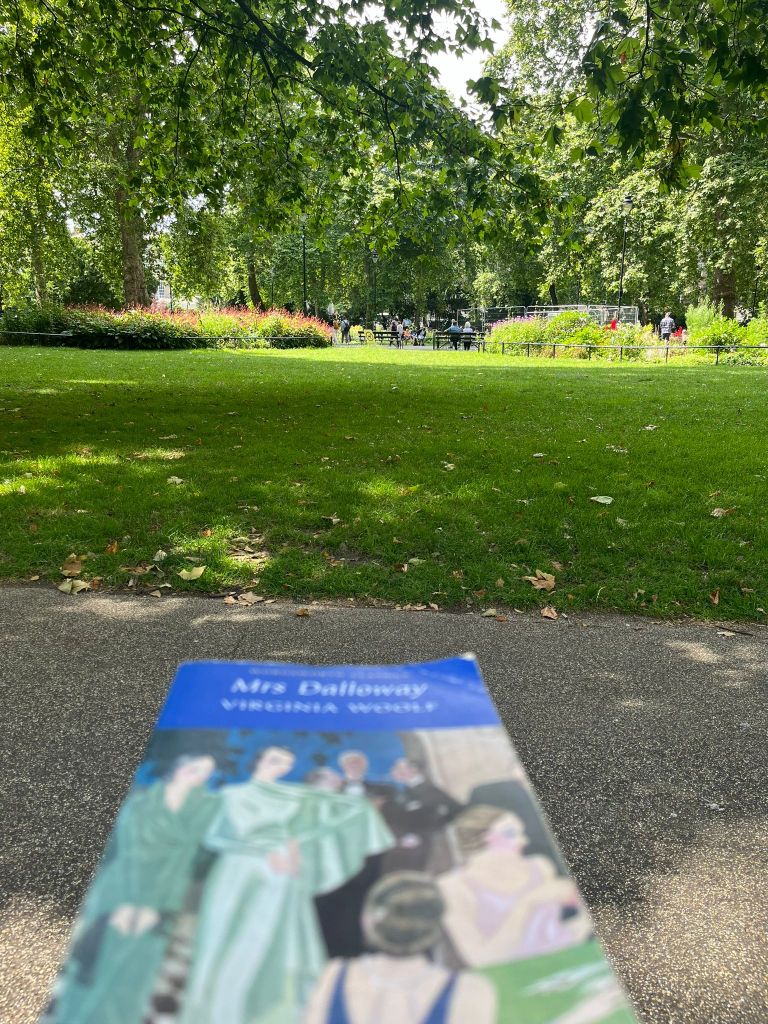
Needless to say, my pupils are in no way similar to any of the characters from Mrs Dalloway. They’re not upper class, they aren’t middle-aged, they haven’t fought in the First World War, and they don’t live in London (I could probably name more elements my pupils would not be able to identify with). However, they do like to think about their lives so far, especially regarding the relationships they’ve had. They certainly never object to sharing plenty of details about boyfriends, girlfriends, and so-called situationships that we never asked for. It reminded me of Clarissa Dalloway, who thinks about how she might have been in love with Sally Seton when she was younger, or might have married Peter Walsh, her old friend, instead of Richard. So maybe there is some element of Mrs Dalloway buried inside them?
While nothing much happens, precisely, in Mrs Dalloway, the characters do walk around a lot. Last year, when I was in London on my own, I walked past every important location mentioned in Woolf’s novel, and I loved it. It was almost as though this allowed me to be part of the story, in the same way that the novel is not just set in London, but the city becomes one of the characters, forcing the plot forward. My pupils, however, were not exactly fans of any forward-going force; instead, they kept asking us how long this walking tour would last, and if they could please take a break. They were hardly interested in their surroundings at all, let alone allowing the environment to evoke certain memories. So maybe they are not really similar to Mrs Dalloway after all?
Another important aspect in Mrs Dalloway is society. Upper-class Clarissa is preoccupied with presenting herself, her husband, and her house in the right way. While walking around the city, she makes sure she buys the right flowers, that her clothes fit her just right, and that the Prime Minister, who might show up at her party, will adore her as a hostess. My pupils, in much the same way, are also very aware of the way they present themselves, both in the real world, with their make-up and their fancy clothes, and online, their reels filtered cleverly to mask any imperfections. Can it be that they could relate to Mrs Dalloway?
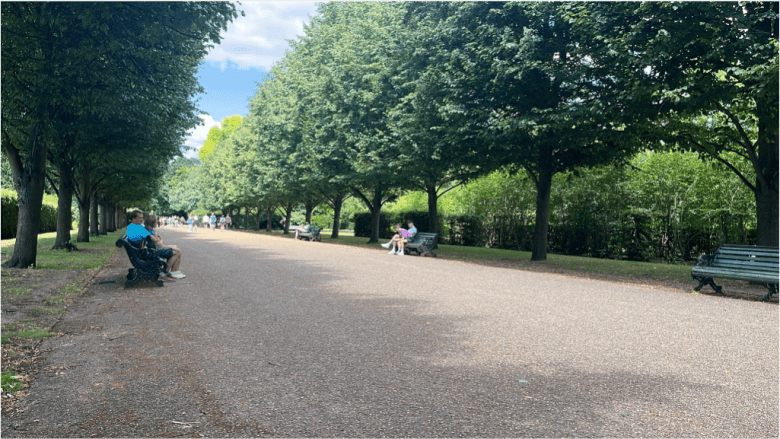
One of the reasons why Mrs Dalloway has had such a lasting impact on literature is its style. Using long sentences and extended metaphors, Woolf employs the so-called stream of consciousness to mirror a person’s natural way of thinking (instead of the more common ‘she thinks…’). This results in a wonderful, almost dreamlike way of writing, which demands the reader’s full attention. Here’s why that’s problematic: my pupils’ thoughts are in no way similar to that stream of consciousness. In fact, I daresay there’s hardly any consciousness at all, nor are they able to focus on anything for longer than ten seconds. Next year, we’ll read Mrs Dalloway in class, but I’m afraid they won’t like it at all.
Finally, Mrs Dalloway starts and ends with the Big Ben, its hourly chimes symbolising the passage of time with its ‘leaden circles dissolving in the air’. Our trip ended there, too, since the final walk we did was a short tour from Westminster to Buckingham Palace. Mrs Dalloway and her husband Richard live in the shadow of the Big Ben, and I made sure to point out their home to my colleague. And there they were, thirty teenagers, tired of walking, tired of all the impressions of that enormous, wonderful, glorious city. And there was Mrs Dalloway, walking right beside them without them knowing.
And there I was, smiling brightly, without them knowing why.
What do you think of Mrs Dalloway? Can we visit a city by reading a book about it? Do you think my pupils were aware of Woolf’s ghost surrounding them? Which book set in London would you like to read? Which books will you celebrate after one hundred years? Please let me know in the comments!
 The Open Book
Wonderful post, it’s been years since I’ve read Mrs Dalloway, tempted to dig it out.
LikeLiked by 1 person
Thank you so much! And you should, it’s such a wonderful, unique novel. Please let me know what you think of it!
LikeLiked by 1 person